
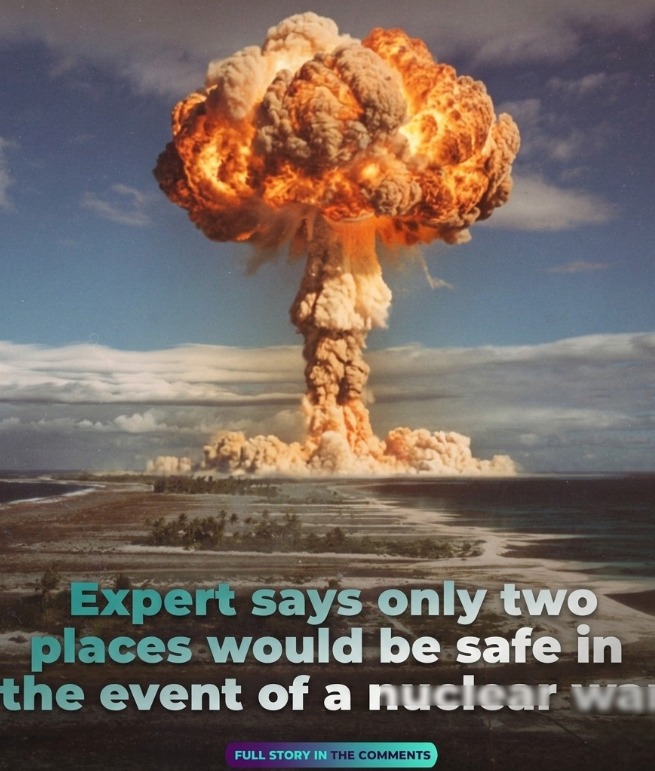
Global tensions and the renewed threat of nuclear conflict have left many wondering where survival might be possible in a worst-case scenario. With major powers maintaining nuclear arsenals, the prospect of global devastation raises urgent questions about safety and long-term survival.
Contrary to popular belief, the safest options may not be underground bunkers or high-tech shelters. Investigative journalist Annie Jacobsen highlights countries in the Southern Hemisphere, particularly New Zealand and Australia, as offering the best odds for survival in the event of nuclear war.
Jacobsen notes that these nations are geographically distant from the Northern Hemisphere’s major powers and likely targets, reducing the chance of direct strikes. Their isolation provides a strategic buffer against immediate fallout from nuclear explosions.
Another critical factor is agriculture. Research on nuclear winter predicts catastrophic global cooling that could devastate Northern Hemisphere crops for years. Southern Hemisphere nations, with favorable climates and arable land, would be better positioned to sustain food production and support survivors.
Radiation, ozone layer damage, and global temperature drops would further threaten populations. Without functional agriculture, survivors could face severe food shortages, forcing reliance on underground shelters and creating intense competition for resources.
Studies by atmospheric scientist Owen Toon suggest that a full-scale nuclear war could kill billions through starvation and environmental collapse. Countries like New Zealand and Australia may provide the most viable refuge for the remaining population.
Within the United States, certain regions near missile silos—Colorado, Wyoming, Nebraska, Montana, and North Dakota—would be primary targets, while states farther from military infrastructure, including Maine, New Hampshire, and Florida, could see less immediate destruction. Still, long-term radiation and food shortages remain a serious concern.
Ultimately, survival depends on geography, agriculture, and distance from targets. While no place is truly safe in a nuclear conflict, New Zealand and Australia may offer the best chances. Their isolation and agricultural capacity make them unexpected refuges in a world facing the dire consequences of nuclear war.