
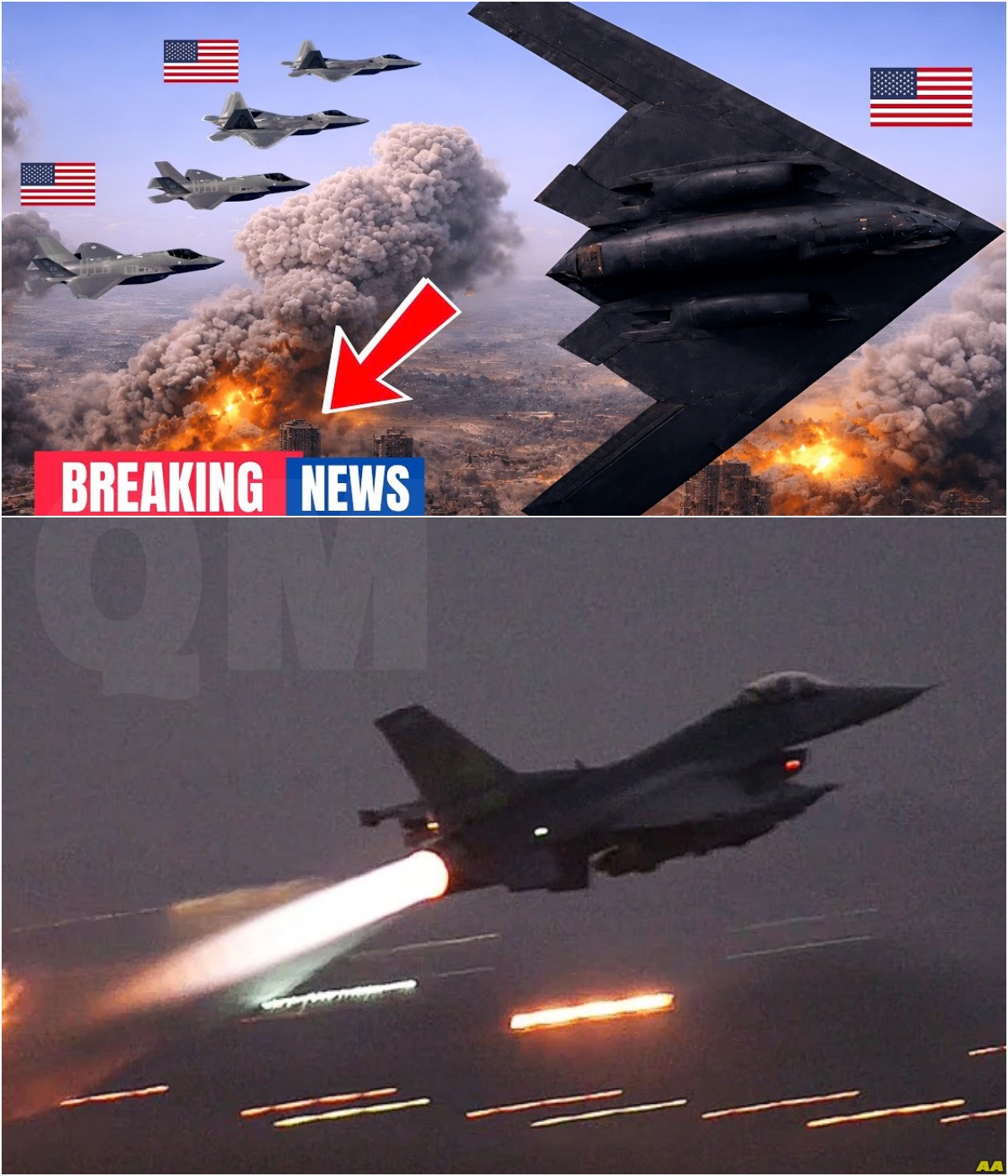
In a dramatic escalation of military presence, more than 120 U.S. warplanes have repositioned toward the Middle East in just a matter of days.
This significant buildup includes advanced aircraft such as F-22 Raptors and F-35 Lightning IIs, alongside dozens of F-16s, tankers, and AWACS (Airborne Warning and Control System) aircraft.
The deployment of two carrier strike groups signals that this is not a routine military maneuver.
thumbnail
If strikes were to commence, Iran’s conventional air force could face neutralization within 48 to 72 hours.
However, the pressing question is not merely about the immediate military capability of the U.S. forces.
The real concern lies in what happens after the initial strikes.
Iran has built a formidable defense mechanism over the years, characterized by layered air defenses, road-mobile ballistic missiles, drone swarms, and proxy networks throughout the region.
These preparations were strategically designed for one singular purpose: survival and retaliation.
As tensions mount, the focus shifts to critical geopolitical hotspots, notably the Strait of Hormuz, a vital artery for global oil markets.
The implications of military action in this region extend far beyond the battlefield, affecting oil prices and global economic stability.
US deploys 120 additional warplanes to Middle East amid tensions with Iran – [İLKHA] Ilke News Agency
The Geopolitical Landscape
The current situation is a reflection of a complex geopolitical landscape.
Iran’s military capabilities, including its air defense systems and missile technology, pose a significant challenge to U.S. forces.
The country’s layered air defenses are designed to thwart incoming attacks and protect its critical infrastructure.
Moreover, Iran’s road-mobile ballistic missiles provide it with a mobile strike capability that complicates any military planning by adversaries.
In addition to conventional military assets, Iran has developed sophisticated drone technology, enabling it to project power across the region.
These drones can be deployed for surveillance, reconnaissance, and even offensive operations, adding another layer of complexity to any potential conflict.
US warplanes launch first strikes from Turkey against Islamic State targets in Syria | South China Morning Post
Regional Proxy Networks
Beyond its own military capabilities, Iran has cultivated a network of proxy groups throughout the Middle East.
These groups, including Hezbollah in Lebanon and various militias in Iraq and Syria, serve as force multipliers for Iran’s strategic objectives.
In the event of a U.S. strike, these proxies could be activated to retaliate against American interests and allies in the region.
This potential for escalation raises the stakes significantly, as a broader conflict could ensue, drawing in multiple regional players and global powers.
The Economic Implications
The Strait of Hormuz is not just a strategic military chokepoint; it is also a critical artery for global oil supplies.
Approximately 20% of the world’s oil passes through this narrow waterway, making it a focal point for international trade and energy security.
Any disruption to oil shipments could lead to significant spikes in oil prices, impacting economies worldwide.
As tensions rise, global markets are reacting to the uncertainty surrounding potential military actions in the region.
Investors and policymakers are closely monitoring developments, aware that the ramifications of conflict could ripple far beyond the Middle East.
US Forces Launch 12 Air Strikes in Iraq, 3 in Syria
Global Powers Watching Closely
As the situation unfolds, global powers are watching closely.
The United States, with its extensive military resources and alliances, is prepared to act if necessary.
However, other nations, including Russia and China, have vested interests in the outcome of any conflict involving Iran.
These countries may seek to exploit the situation to expand their influence in the region, complicating the U.S. response.
The interplay of global politics adds another layer of complexity to an already volatile situation.
The Human Cost of Conflict
While military strategies and geopolitical maneuvers dominate the headlines, it is essential to remember the human cost of conflict.
War brings devastation to civilian populations, leading to loss of life, displacement, and long-term societal impacts.
As military forces mobilize, the potential for civilian casualties increases, raising ethical questions about the conduct of war.
International humanitarian organizations are urging caution and advocating for diplomatic solutions to prevent unnecessary suffering.