
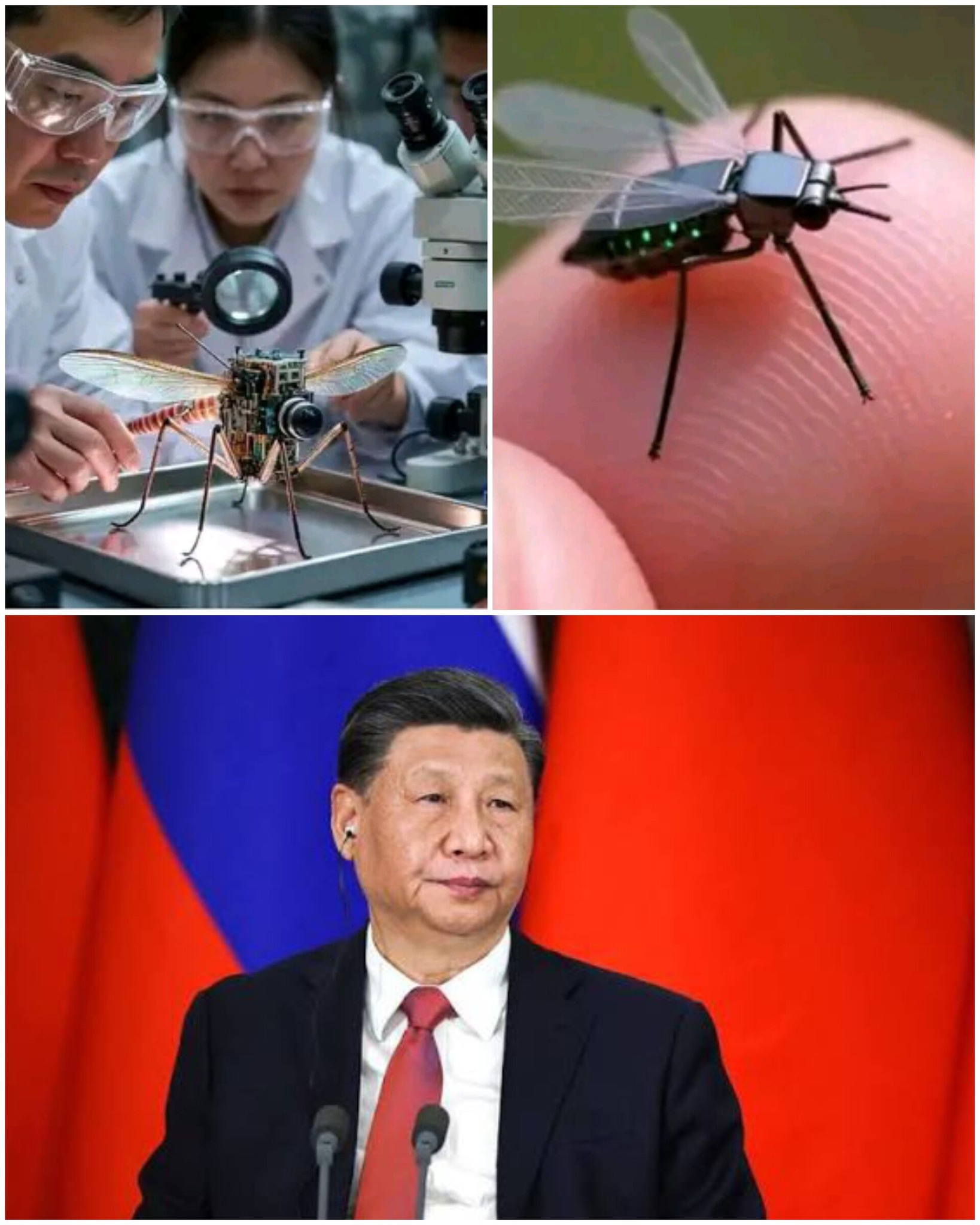
China has developed a tiny surveillance drone about the size of a mosquito. It can fly for hundreds of kilometers, stay in the air for a long time, and take very clear pictures.
The drone is black and so small that it is almost impossible to see in the sky.
This shows how advanced China’s technology has become and how it helps them monitor and maintain security everywhere.
China has developed a tiny surveillance drone about the size of a mosquito, marking a significant breakthrough in miniaturized military and intelligence technology. Despite its extremely small size, this drone is capable of flying for hundreds of kilometers, remaining airborne for extended periods, and capturing highly detailed, high-resolution images.
The drone is black and nearly invisible to the naked eye, making it incredibly difficult to detect, especially in low-light conditions or at high altitudes. Its compact design allows it to operate discreetly in both urban and rural environments, potentially entering areas that would be inaccessible to larger drones or traditional surveillance equipment.
What makes this technology even more impressive is the level of precision engineering required to fit cameras, sensors, communication systems, and power sources into such a tiny device. Experts believe that this type of drone could be used for a wide range of purposes, including intelligence gathering, border surveillance, counter-terrorism operations, and even covert missions.
In addition, the development of such drones raises important global discussions about privacy, security, and the future of warfare. Devices this small could easily be deployed without detection, increasing concerns among governments and civilians alike about how such technology might be used.
Overall, this innovation highlights how advanced China’s technology sector has become, demonstrating its ability to push the boundaries of modern engineering. It also shows how these advancements can be leveraged to monitor environments more effectively and maintain security across vast areas, while simultaneously reshaping the landscape of surveillance and defense worldwide.