
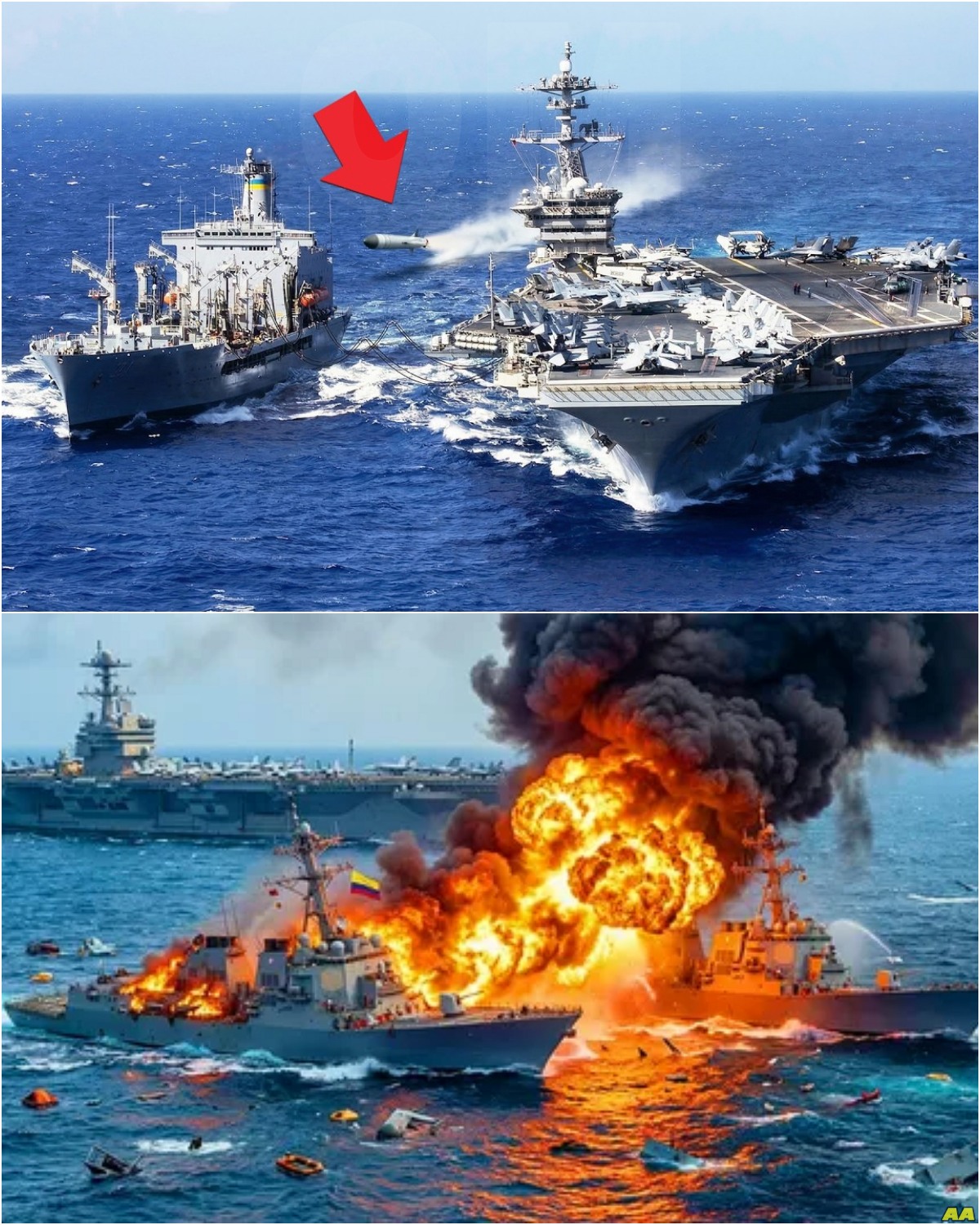
The United States Navy’s aircraft carriers stand as formidable symbols of military might and technological advancement.
However, what happens when these floating fortresses find themselves in a moment of vulnerability?
Specifically, what risks do they face while refueling at sea?
This article delves into a hypothetical scenario that exposes the potential weaknesses of a U.S. supercarrier during a critical operation known as underway replenishment.
In this examination, we will explore the multi-layered defense systems that protect these vessels and analyze why this moment is often referred to as the “death box” by naval analysts.
The Vulnerability of Refueling
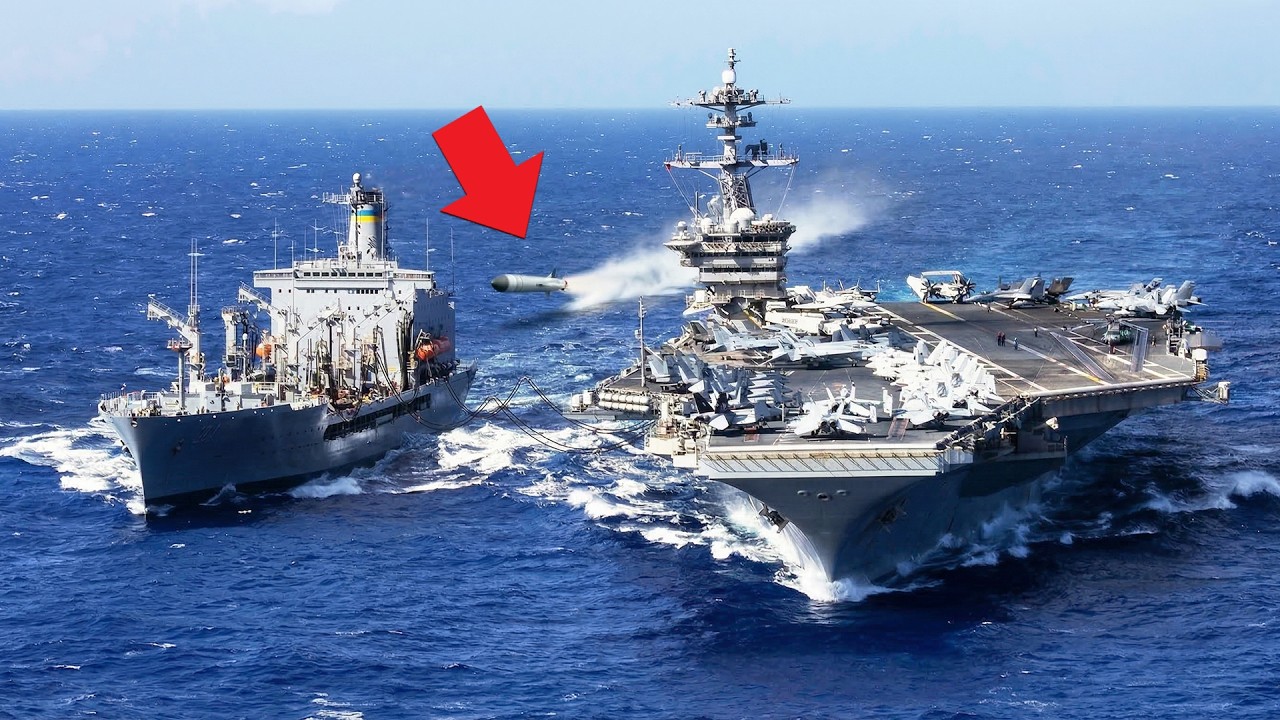
When a supercarrier like the USS Gerald R. Ford is refueling, it is essentially at a standstill, tethered to a supply ship.
This operation, while crucial for sustaining naval operations, presents an opportunity for adversaries to exploit perceived weaknesses.
Analysts suggest that this moment is the most vulnerable for an aircraft carrier, making it a prime target for an enemy attack.
As the carrier takes on fuel, it must also be on high alert, prepared to respond to any threats that may arise.
Understanding the “Death Box”
The term “death box” refers to the precarious situation a carrier faces while refueling.
During this time, the carrier’s defensive capabilities can be stretched thin.
However, the U.S. Navy has developed a comprehensive strategy to mitigate these risks.
This strategy involves a multi-layered defense network that activates instantly in response to any potential threat.
From electronic warfare capabilities to aerial support from combat air patrol fighters, every component of the carrier strike group plays a critical role in ensuring the safety of the vessel and its crew.
The Role of Electronic Warfare
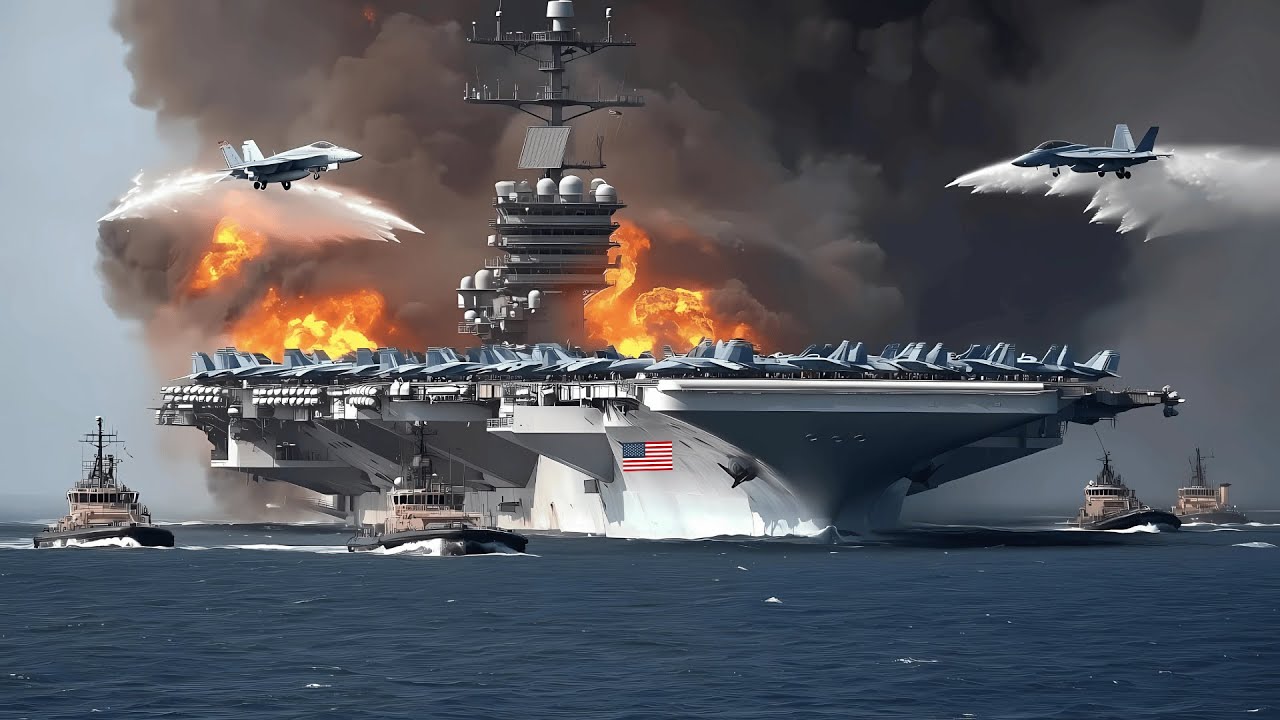
One of the first lines of defense during a refueling operation is electronic warfare.
This involves the use of technology to disrupt or disable enemy systems.
By jamming communications and radar signals, the carrier can create a protective bubble around itself.
This capability is vital in preventing an enemy from successfully coordinating an attack.
The Navy’s electronic warfare systems are designed to provide real-time intelligence, allowing the carrier to remain one step ahead of potential threats.
Combat Air Patrol Fighters
In addition to electronic warfare, the carrier relies heavily on combat air patrol (CAP) fighters.
These aircraft are stationed nearby to intercept any incoming threats before they can reach the carrier.
With advanced radar and missile systems, CAP fighters can engage enemy aircraft at beyond visual range, ensuring that the carrier remains protected even during its most vulnerable moments.
The presence of these fighters acts as a deterrent, dissuading adversaries from attempting an attack.

Aegis Destroyers and Their Importance
Another crucial element of the carrier’s defense network is the Aegis destroyers that accompany it.
These ships are equipped with sophisticated radar and missile systems capable of tracking and engaging multiple targets simultaneously.
During a refueling operation, Aegis destroyers provide an additional layer of protection, ready to intercept any incoming threats.
Their advanced systems are designed to handle a variety of scenarios, from drone swarms to missile attacks, making them indispensable to the carrier strike group.
The Threat of Drone Swarms
One of the most concerning scenarios for naval analysts is the potential for a drone swarm attack.
As unmanned aerial vehicles become more sophisticated and numerous, the threat they pose to naval operations increases.
A swarm of drones could overwhelm a carrier’s defenses, exploiting any gaps during the refueling process.
However, the U.S. Navy is aware of this risk and has developed countermeasures to address it.
From electronic warfare tactics to the use of anti-drone systems, the Navy is prepared to adapt to this evolving threat.

Hypersonic Missiles: A New Challenge
The emergence of hypersonic missiles presents a new challenge for the U.S. Navy.
These weapons can travel at speeds exceeding Mach 5, making them difficult to detect and intercept.
During a refueling operation, the risk of a hypersonic missile attack could be particularly concerning.
To counter this threat, the Navy has invested in advanced missile defense systems that are designed to track and engage hypersonic projectiles.
This multi-layered approach ensures that even in the face of advanced weaponry, the carrier remains protected.
The Last Line of Defense: Phalanx CIWS
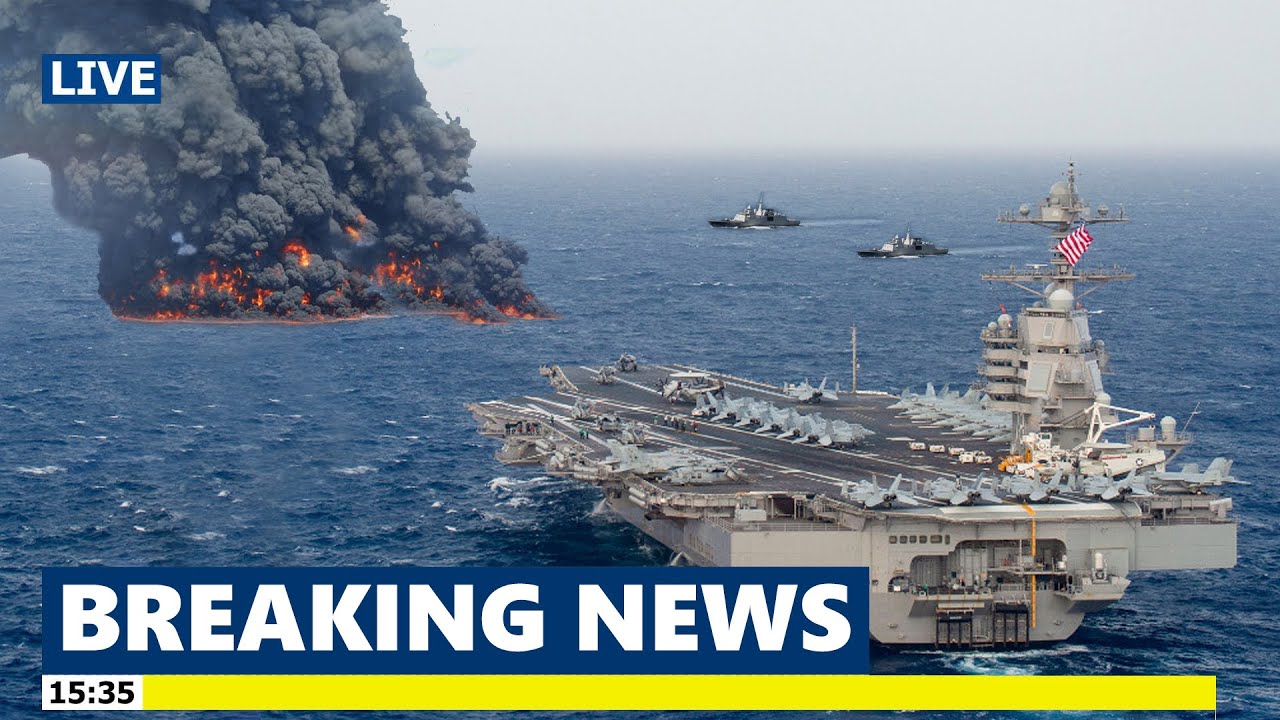
In the event that an attack penetrates the outer layers of defense, the Phalanx Close-In Weapon System (CIWS) serves as the last line of defense.
This automated system is designed to detect and destroy incoming threats at close range.
Equipped with a rapid-fire gun and advanced targeting systems, the Phalanx CIWS can engage multiple targets in a matter of seconds.
While the hope is that it never has to be used, its presence provides a critical safety net for the carrier and its crew.
Retaliation from the Carrier Strike Group
Should an enemy attempt to attack a U.S. supercarrier, the repercussions would be severe.
The carrier strike group is not just a single vessel; it is a coordinated force capable of delivering devastating retaliation.
With a variety of strike capabilities at its disposal, including airstrikes and missile launches, the carrier can respond swiftly and decisively to any aggression.
This potential for retaliation serves as a powerful deterrent, discouraging adversaries from even considering an attack.
Conclusion
As we analyze the vulnerabilities and defenses of U.S. supercarriers, it becomes clear that while the refueling process presents risks, the Navy is well-prepared to handle these challenges.
Through a combination of electronic warfare, aerial support, and advanced missile defense systems, the carrier strike group is equipped to protect itself against a variety of threats.
Understanding the dynamics of this operation is crucial for appreciating the complexities of modern naval warfare.
In a world where military technology continues to evolve, the U.S. Navy remains committed to maintaining its edge, ensuring that its carriers remain formidable forces on the high seas.
The next time you see a supercarrier at sea, remember the intricate web of defenses that protect it, especially during those critical moments of refueling.
The stakes are high, but so are the capabilities of the U.S. Navy.
In the realm of military strategy, knowledge and preparation are key, and the Navy is always ready for whatever challenges may arise.