
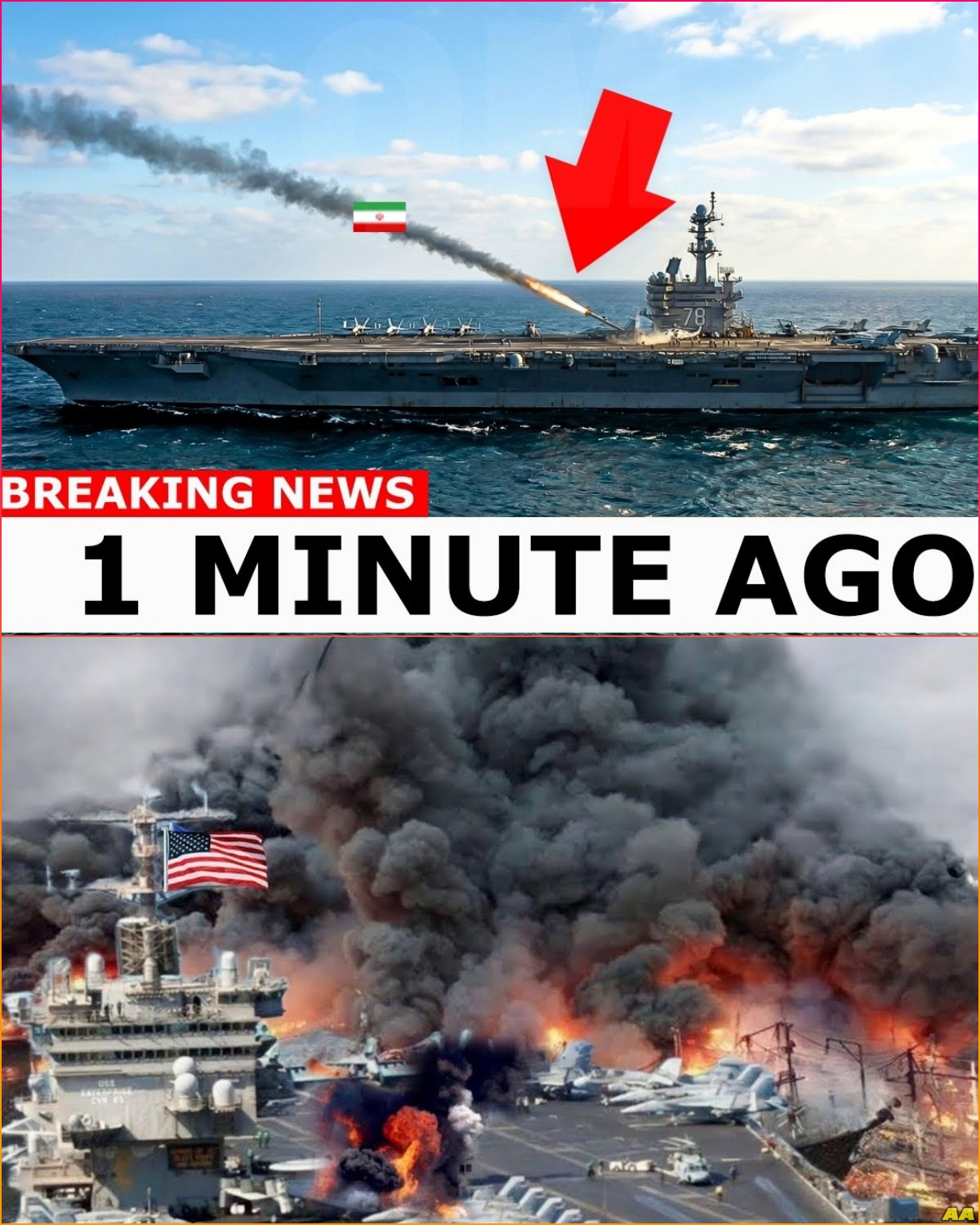
In a dramatic escalation of geopolitical tensions, a hypothetical scenario unfolds in the Arabian Sea, where the USS Gerald Ford, the United States Navy’s most advanced aircraft carrier, finds itself under siege.
Imagine the scene: a calm morning suddenly shattered by the piercing alarms of missile detection systems.
Iran has launched an unprecedented missile attack, firing eight identical missiles aimed directly at the carrier.

Among these, a single Khorramshahr warhead, laden with 1,500 kilograms of high explosives, is cleverly concealed among seven sophisticated decoys.
As the Aegis combat system springs into action, it unleashes a flurry of interceptors, each one racing to identify and neutralize the incoming threats.
But in a harrowing twist, the interceptor count rapidly dwindles to zero, leaving two missiles still hurtling toward their target.
In this moment of chaos, Lieutenant Rachel Webb, a vigilant officer, notices a subtle yet critical detail—a 0.3 percent difference in the exhaust plume of one missile.
This observation comes just 51 seconds into the engagement, a split second that could change the course of the battle.
For 14 agonizing minutes, she focuses intently on contact 6, while her superiors are preoccupied with broader operational priorities.
What follows is a gripping exploration of modern naval warfare, military technology, and strategic doctrine.
The Tactical Landscape
The Arabian Sea has long been a theater of military operations, but this scenario raises the stakes to an entirely new level.
The USS Gerald Ford, equipped with cutting-edge technology and a formidable arsenal, represents the pinnacle of American naval power.
However, the Iranian missile capabilities, particularly the Khorramshahr, have evolved significantly.
With a range of over 2,000 kilometers and the ability to carry various payloads, these missiles pose a serious threat to naval assets in the region.
The decision to hide a warhead among decoys demonstrates a sophisticated understanding of modern warfare tactics.
This tactic not only complicates interception efforts but also tests the limits of existing defense systems.

The Aegis Combat System
At the heart of the USS Gerald Ford’s defense is the Aegis combat system, renowned for its ability to track and engage multiple targets simultaneously.
Yet, in this scenario, the system faces a unique challenge.
As the missiles approach, the Aegis system fires every interceptor in its magazine, desperately trying to discern the real threat from the decoys.
With each interceptor launched, the tension mounts.
The crew watches as the count hits zero, a moment of dread as two missiles remain unaccounted for.

Lieutenant Rachel Webb’s Critical Observation
In the midst of this chaos, Lieutenant Rachel Webb’s keen eye becomes a beacon of hope.
Her training and experience allow her to spot the minute difference in the exhaust plume.
This detail, seemingly insignificant at first glance, could hold the key to identifying the true threat.
As she monitors contact 6, the weight of her responsibility becomes palpable.
Her focus on this single missile contrasts sharply with the broader operational concerns of her superiors.
In a high-stakes environment, where every second counts, her dedication to her post exemplifies the spirit of the Navy.

The Broader Implications
This hypothetical confrontation raises profound questions about the future of naval warfare.
As nations like Iran develop increasingly sophisticated missile technologies, the need for advanced defense systems becomes more critical than ever.
The scenario serves as a stark reminder of the vulnerabilities inherent in even the most advanced military assets.
The balance of power in the region hangs by a thread, and the implications extend far beyond the immediate engagement.
The Aftermath of the Attack
Should the USS Gerald Ford successfully defend against this missile onslaught, the ramifications would be significant.
It would not only demonstrate the effectiveness of American military technology but also send a clear message to adversaries about the consequences of aggression.
Conversely, a failure to intercept the missiles could embolden hostile nations and alter the strategic landscape in the Arabian Sea.
The stakes are high, and the outcome of this engagement could influence military doctrine for years to come.
Conclusion
In this dramatized scenario, we witness a compelling exploration of modern naval warfare and the complexities of military strategy.
The interplay between technology, human intuition, and decision-making under pressure is at the forefront of this narrative.
As we reflect on the lessons learned from this fictional engagement, it becomes clear that the future of naval warfare will require constant adaptation and innovation.
The USS Gerald Ford may stand as a symbol of American naval power, but in the face of evolving threats, vigilance and preparedness remain paramount.
This scenario, while fictional, serves as a powerful reminder of the realities of modern conflict and the importance of strategic foresight in an increasingly complex world.
Thank you for engaging with this thought-provoking exploration of naval warfare.