
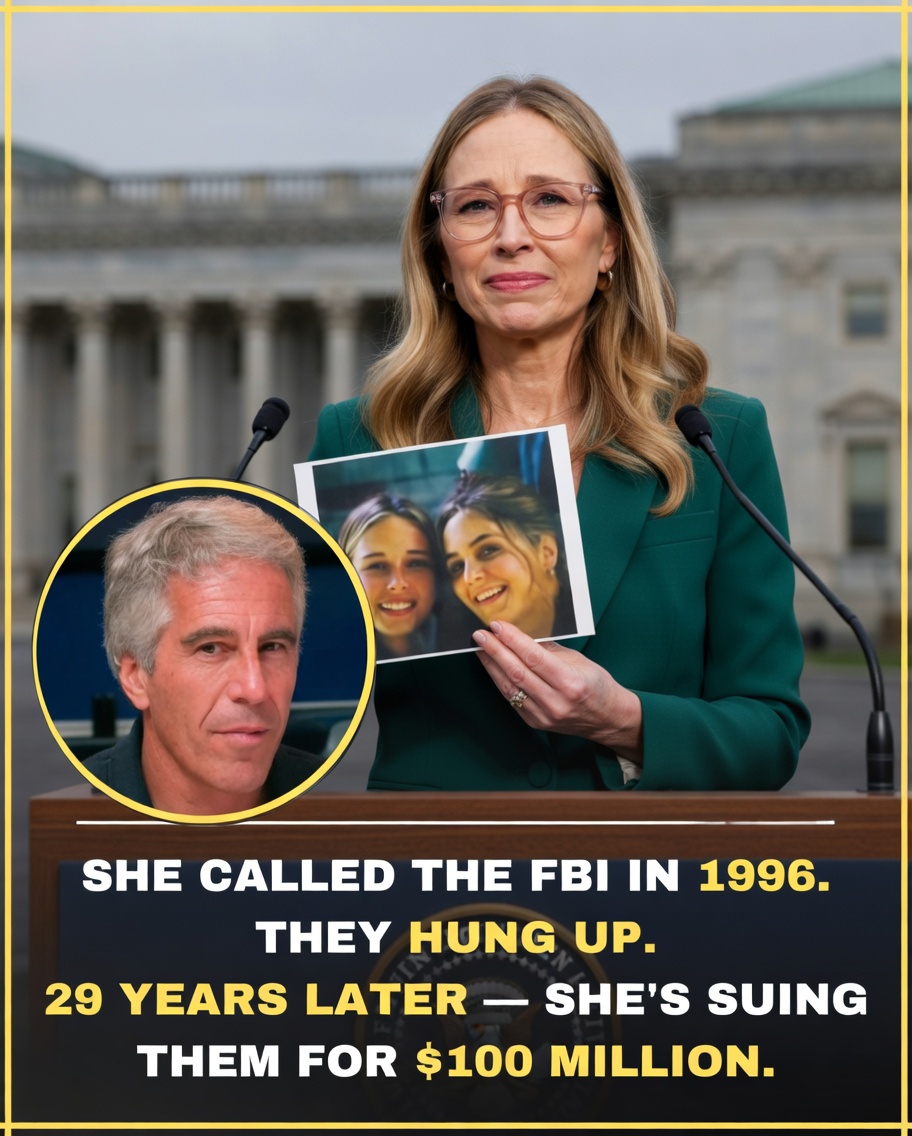
In September 1996, a phone call was placed to the Miami field office of the Federal Bureau of Investigation—a call that, according to new revelations, may have altered the course of one of the most notorious criminal cases in modern American history.
The caller identified herself as a professional artist. She alleged that Jeffrey Epstein had stolen photographs of her underage sisters and described deeply troubling behavior she claimed to have witnessed inside his Manhattan residence. Her name, now widely known, is Maria Farmer.
At the time, nothing appeared to happen.
No case number was issued—at least none that could later be confirmed. No investigation was publicly acknowledged. According to Farmer, the call ended without follow-up. For years, her account remained largely unverified, circulating among journalists, attorneys, and investigators who struggled to locate any official record of the complaint.
Nearly three decades later, that narrative has dramatically shifted.
A Claim Dismissed — Then Rediscovered
For years, Maria Farmer insisted she had contacted federal authorities in 1996. Her claims were often met with skepticism—not necessarily because they were implausible, but because no documentation could be found to support them.
That changed in December 2025.
As part of a broader release of materials related to Epstein, the United States Department of Justice disclosed a document dated September 3, 1996. The record described a complaint made to the FBI regarding Epstein and alleged misconduct involving minors. The complainant was identified only as “a professional artist.”
Farmer’s legal team later confirmed that the description matched her account. In interviews, Farmer described a complex emotional response—relief at being vindicated, but also anguish over what might have been prevented.
“I feel redeemed,” she said in a televised interview. “I’m finally vindicated. And I’m devastated about all the other little girls who were harmed because the FBI didn’t do their job.”
The Long Gap Before Action
The rediscovered document has renewed scrutiny of a timeline that many critics now describe as deeply troubling.
It was not until the mid-2000s—nearly a decade after Farmer’s alleged report—that a separate investigation gained traction. A detective in Palm Beach, Florida, began looking into allegations involving Epstein. That inquiry eventually uncovered dozens of potential victims, along with photographic and documentary evidence suggesting a broader pattern of abuse.
Federal authorities formally became involved. Yet what followed has remained controversial.
Epstein ultimately reached a plea agreement that resulted in a relatively short sentence. He served time under conditions that critics have long argued were unusually lenient, including work-release privileges. The deal has since been cited as a major point of contention in discussions about accountability and justice.
Renewed Legal Pressure
The resurfacing of the 1996 complaint has now become central to a new wave of legal action.
A group of 12 women—identified in court filings as Doe 1 through Doe 12—has filed a lawsuit seeking $100 million in damages from the FBI. The plaintiffs argue that repeated failures to act on credible reports allowed abuse to continue over an extended period.
Their legal claim centers on negligence: that federal authorities either failed to properly investigate or did not take sufficient action based on available information.
Legal experts note that such cases are complex. Lawsuits against federal agencies face significant procedural and legal hurdles, including questions about sovereign immunity and the standards required to prove liability.
Nevertheless, the case represents a significant escalation in efforts to hold institutions accountable—not just individuals.
The Missing Record Question
One of the most contentious issues raised by the newly surfaced document concerns its absence from a 2020 internal review conducted by the FBI.
That review examined the bureau’s handling of allegations related to Epstein. At the time, critics already argued that the report left unanswered questions. The absence of the 1996 complaint from that review has now intensified scrutiny.
If the document existed—as current disclosures suggest—why was it not included?
And if it was excluded, was that omission accidental, procedural, or intentional?
So far, there has been no definitive public explanation.
A Broader Debate About Accountability
The case has reignited broader debates about institutional responsibility, particularly when early warnings are missed or dismissed.
Advocates for victims say the situation highlights systemic issues in how allegations—especially those involving powerful individuals—are handled. They argue that failures at early stages can have long-term consequences, allowing patterns of abuse to continue unchecked.
Others caution that retrospective analysis must account for the standards and context of the time, including how information was documented and processed in the 1990s.
Still, the central question remains difficult to ignore: what might have been different if the 1996 complaint had triggered a full investigation?
The Human Impact
Beyond legal arguments and institutional analysis lies the human dimension of the case.
For Maria Farmer and other accusers, the issue is not only about documents or procedures—it is about recognition, validation, and the long-term consequences of being unheard.
Her statement following the document’s release reflects that dual reality: a sense of personal vindication alongside grief for others.
That tension now shapes much of the public conversation.
What Comes Next
The lawsuit filed by the 12 women is expected to move through federal court, where judges will determine whether the claims can proceed and under what legal framework.
Meanwhile, calls for further investigation into the handling of early reports have grown louder. Some lawmakers and advocacy groups are urging additional reviews, including potential congressional inquiries.
Whether those efforts will lead to new findings—or policy changes—remains to be seen.
An Unfinished Story
The rediscovery of a single document has reopened questions that many believed had already been answered.
It has also underscored how critical early reporting—and early response—can be in complex criminal cases.
As the legal process unfolds, one issue is likely to remain at the center of public attention: not only what happened, but what could have happened differently.
And for many, that question is as significant as any verdict yet to come.