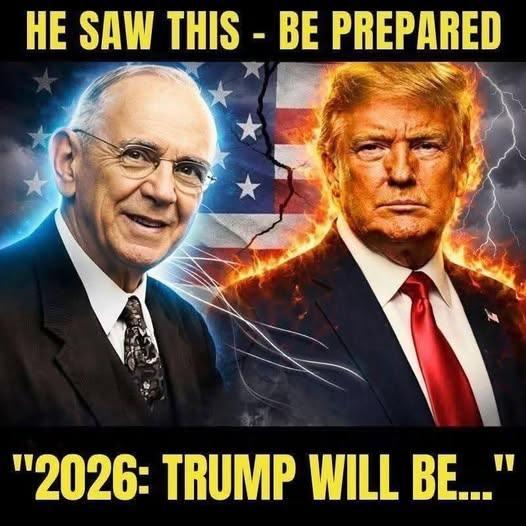
In recent months, social media has been buzzing with claims that a decades-old prophecy by Edgar Cayce is unfolding before our eyes — specifically, that a prediction tied to 2026 and former President Donald Trump is “coming true now.”
But what did Cayce actually say, and how closely do today’s events align with the claims?
The Origins of the Prediction
Edgar Cayce, often called the “Sleeping Prophet,” delivered thousands of readings between the early 1900s and his death in 1945. His predictions touched on everything from health remedies to earth changes, global conflicts, and shifts in political power. Over the decades, followers have interpreted various passages from his readings as forecasts of major geopolitical transformations in the 21st century.
One frequently cited theme in Cayce’s work involves a period of upheaval in American leadership, institutional distrust, and social division, culminating in what some interpret as a national “reset” around the mid-2020s. While Cayce did not name modern political figures — many of whom were born after his death — believers argue that certain descriptions of a controversial leader, rising populism, and institutional disruption align with Trump’s political career.
Why 2026?
The year 2026 has emerged in online discussions as a supposed turning point in Cayce’s timeline of American transformation. Some interpreters point to his broader predictions about economic strain, ideological conflict, and a restructuring of governance. They argue that events unfolding now — political polarization, legal battles involving high-profile figures, and cultural divisions — are early stages of a climactic shift he foresaw.
However, it is important to note that Cayce’s readings were often symbolic and open-ended. Dates were not always precise, and interpretations frequently rely on extrapolation. The claim that he specifically predicted Trump or events tied directly to 2026 stems more from modern reinterpretation than from explicit statements in the original readings.
Parallels Supporters See Today
Those who believe the prophecy is “coming true” often cite:
- Heightened political polarization in the United States
- Ongoing legal and institutional challenges involving prominent leaders
- Widespread public distrust in government, media, and financial systems
- Economic uncertainty and global instability
Supporters argue that these factors reflect Cayce’s warnings about national tests preceding renewal.
Skepticism and Context
Additionally, confirmation bias often plays a role in prophetic interpretation. Once a narrative takes hold — especially online — people may selectively highlight events that appear to validate it while overlooking those that do not.
A Reflection of the Times
Whether one views the Cayce-Trump-2026 connection as prophecy, coincidence, or creative interpretation, the popularity of the claim reveals something important: many Americans sense they are living through a period of profound transition. In times of uncertainty, interest in prophecy and long-range predictions tends to surge.
Ultimately, the idea that a nearly century-old psychic foresaw today’s political climate says as much about current anxieties as it does about Cayce’s writings. As 2026 approaches, debates over leadership, institutions, and national direction will likely intensify — prophecy or not.
For now, the claim that Cayce’s prediction about Trump is “coming true” remains a matter of interpretation rather than documented certainty.