
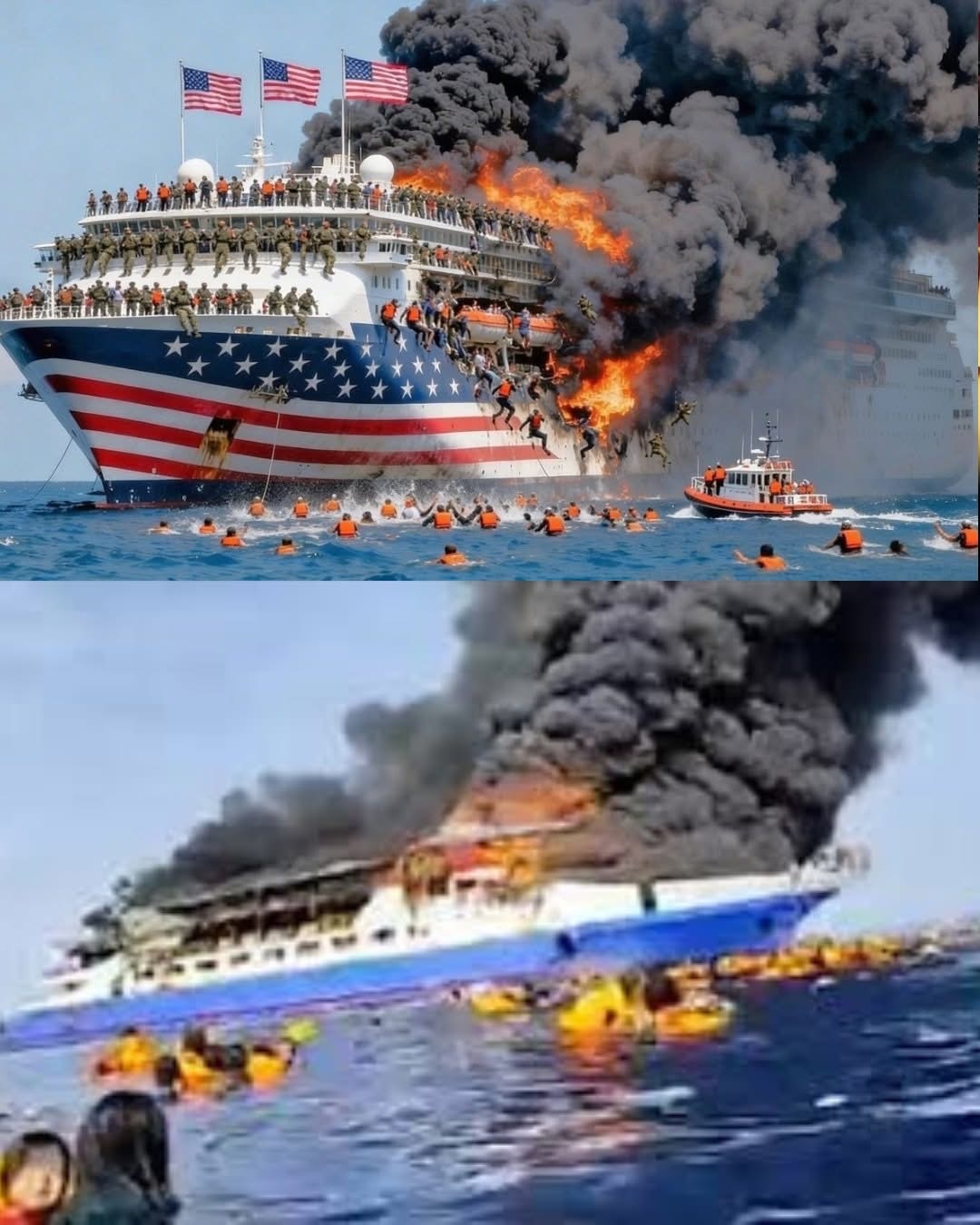
A fire on board a cruise ship caused tense moments at sea and triggered international evacuation protocols. Images circulating on social media show plumes of smoke rising from the ocean as passengers were assisted with life jackets.
The incident occurred during a routine voyage. What was supposed to be a day of rest and relaxation turned into an emergency operation that mobilized the crew and nearby rescue teams.
According to preliminary reports, internal alarms began to sound when smoke was detected in one of the vessel’s technical areas. Within minutes, the emergency protocol was activated.
An immediate response to prevent a greater tragedy.
The crew coordinated the phased evacuation following international standards established by the International Convention for the Safety of Life at Sea (SOLAS). These procedures include the automatic activation of fire suppression systems and the isolation of compartments.
Passengers were guided to designated assembly points. Some boarded lifeboats, while others were assisted by nearby vessels that responded to the distress call.
Maritime safety experts emphasize that a rapid response is crucial in these types of incidents. Every minute counts in containing the emergency and protecting lives.
The origin of the fire is under investigation.
So far, there is no official confirmation of the exact cause of the fire. Technical investigations typically focus on electrical systems, machinery areas, or failures in mechanical components.
Maritime authorities have indicated that a full structural inspection will be carried out, including the analysis of the ship’s electronic records, internal protocols, and crew statements.
Transparency in these processes is fundamental to maintaining public trust in the maritime tourism industry.
Cruise ship safety: international standards
Despite the visual impact of images of fires at sea, the cruise industry is regulated by strict global standards. Modern vessels have multiple redundant safety systems.
Mandatory measures include evacuation drills at the start of each trip, permanent light signage, and continuous staff training.
Experts emphasize that, statistically, cruises remain one of the safest forms of tourist transport worldwide.
Impact on public perception
High-profile incidents often have immediate repercussions on reserves and security perceptions. However, when the emergency response is efficient and well-documented, recovery is usually gradual.
The maritime industry represents billions of dollars annually and relies heavily on rigorous safety standards and international oversight.
While investigations continue, relatives of passengers await official reports detailing the condition of the occupants and the true extent of the incident.
A lesson on prevention and preparedness
This event once again puts the importance of prevention, technical maintenance and constant training in maritime transport at the center of the debate.
Emergencies at sea require precise coordination, clear leadership, and well-rehearsed protocols. The difference between chaos and control often lies in preparation.
Authorities always recommend verifying information through official channels before sharing unconfirmed reports, especially when shocking images circulate on social media.
The investigation remains open as experts analyze every technical detail to determine the causes of the fire and establish responsibility, if any.