
Psoriasis is a chronic skin condition that appears in several forms, each with distinct symptoms and levels of severity. Understanding the different types can help people recognize symptoms early and seek appropriate care.
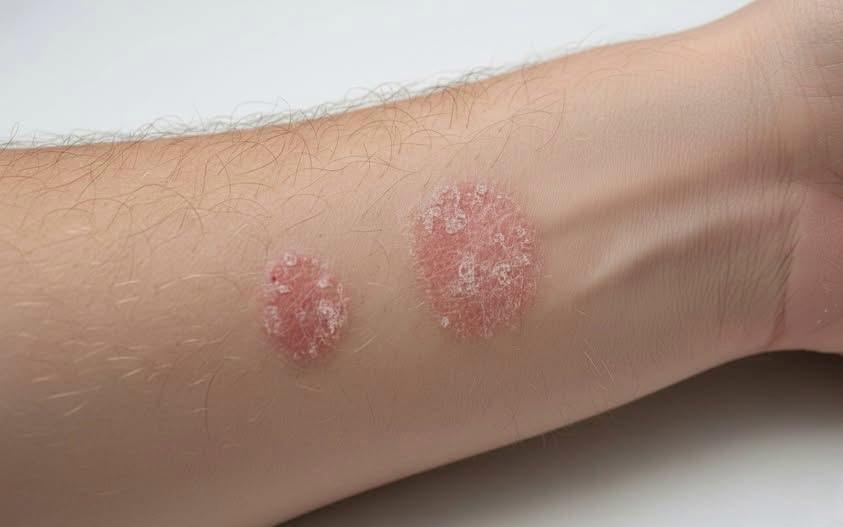
**Plaque psoriasis** is the “most common type.” It appears as red, raised patches covered with silvery scales. These plaques most often develop on the scalp, knees, and elbows, though they can appear anywhere on the body. The skin may feel itchy, sore, or cracked, sometimes leading to bleeding.
**Guttate psoriasis** shows up as small, pink, “drop-shaped spots.” These usually appear on the trunk, arms, and legs and often develop suddenly, sometimes after a throat infection or illness. It is more common in children and young adults and may clear up on its own or progress into another form.
**Pustular psoriasis** causes red, inflamed skin with pus-filled blisters. It may affect specific areas, such as the hands and feet, or spread across large areas of the body. Although the blisters contain pus, they are not caused by infection. This form can be painful and may require medical treatment.
**Inverse psoriasis** develops in moist skin folds, including under the breasts, in the groin, and in the armpits. It appears as smooth, shiny, red patches rather than scaly plaques. Friction and sweating can worsen symptoms, making everyday movement uncomfortable.
**Erythrodermic psoriasis** is a rare but severe form that can resemble a widespread sunburn. It causes intense redness, peeling skin, fever, and overall illness. This type is considered a “medical emergency” and requires immediate care, as it can disrupt the body’s ability to regulate temperature and fluids.
Each type of psoriasis affects the body differently, but all forms benefit from early diagnosis and proper treatment. Recognizing symptoms and understanding these variations can help people manage flare-ups, reduce discomfort, and protect long-term skin health.