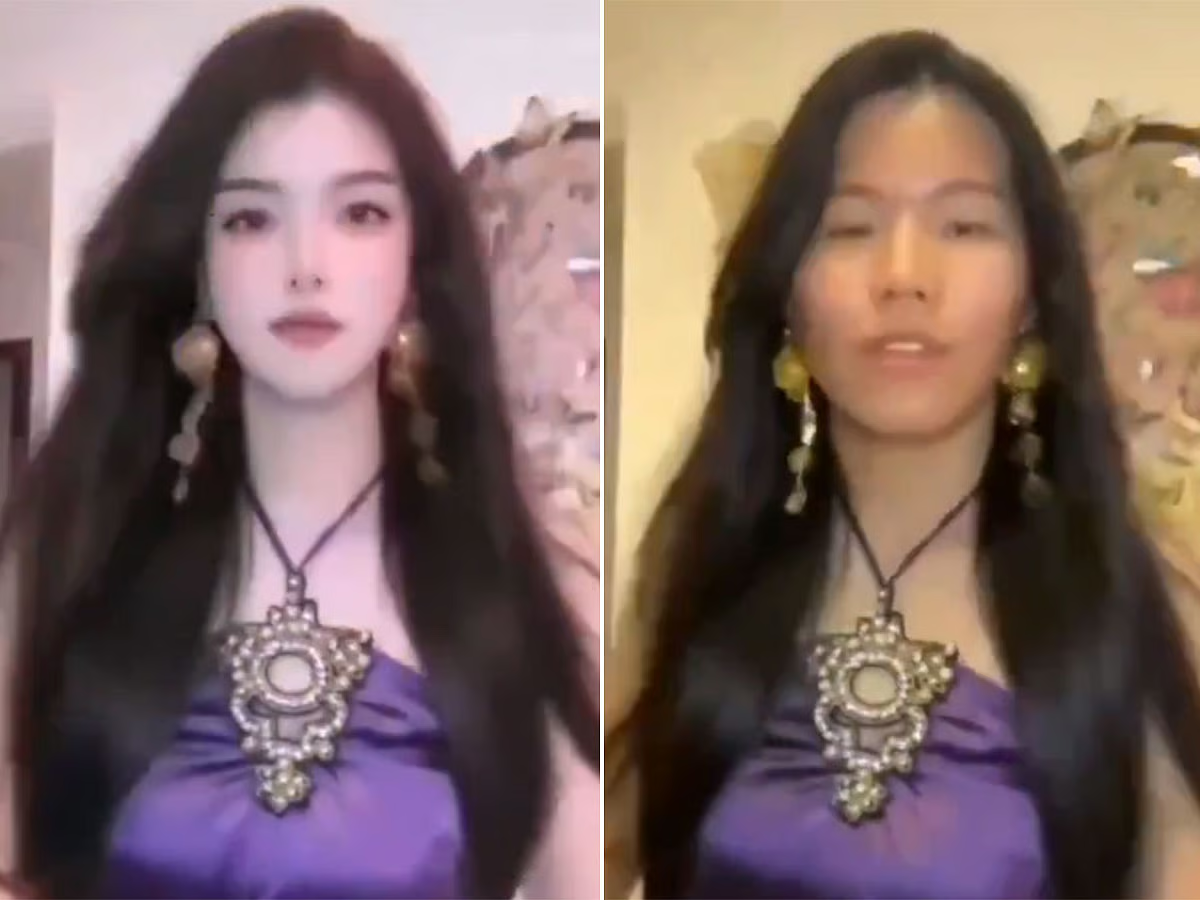
If you doomscroll long enough on TikTok, Threads, or lesser-known livestream platforms, you’ll probably see the clip of a beauty streamer from China posing for the camera, looking all pretty and radiant, and then—Boom!—her filter bugs out, suddenly revealing her true appearance to the whole world. In the clip making the rounds, the influencer’s face looks much older and more natural, with real skin texture and a warmer, more lived-in look. You know, like the good old #nofilter trend, but unintentionally.
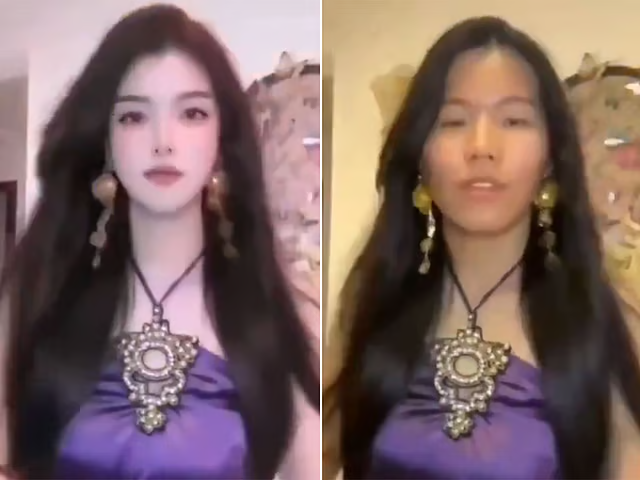
The glitch only lasted for a brief moment, but, according to social media chatter, that split-second “reveal” supposedly cost her a huge chunk of her audience—around 140,000 followers. That huge number and even the full context of the clip are still iffy, as no official verification has been issued. Currently, it’s hard to know whether any of it is real, including the numbers, or if it’s just Internet chatters overreacting. But regardless, the reaction is very real: people instantly started arguing about honesty, beauty standards, and whether filters have gone from “fun” to “fraud.” Looks like some of those fans were heavily invested and quite parasocial.
Surprisingly, many viewers actually defended her. Some said the unfiltered version looked better, more human, and more alive, while the filtered version looked flat and “lifeless.” Others used the moment to push back on harsh beauty expectations, especially the kind that reward looking unrealistically young and poreless at all times.
This incident isn’t the first time China’s streaming scene has had a “filter glitch” scandal. Back in 2019, a streamer who used the online name “Your Highness Qiao Biluo” became infamous after a mid-stream malfunction revealed she wasn’t the youthful, anime-like persona viewers thought they were watching. The reveal lasted only seconds, but that was enough for the clip to explode across social media.
The glitch only lasted for a brief moment, but, according to social media chatter, that split-second “reveal” supposedly cost her a huge chunk of her audience—around 140,000 followers. That huge number and even the full context of the clip are still iffy, as no official verification has been issued. Currently, it’s hard to know whether any of it is real, including the numbers, or if it’s just Internet chatters overreacting. But regardless, the reaction is very real: people instantly started arguing about honesty, beauty standards, and whether filters have gone from “fun” to “fraud.” Looks like some of those fans were heavily invested and quite parasocial.
Surprisingly, many viewers actually defended her. Some said the unfiltered version looked better, more human, and more alive, while the filtered version looked flat and “lifeless.” Others used the moment to push back on harsh beauty expectations, especially the kind that reward looking unrealistically young and poreless at all times.
This incident isn’t the first time China’s streaming scene has had a “filter glitch” scandal. Back in 2019, a streamer who used the online name “Your Highness Qiao Biluo” became infamous after a mid-stream malfunction revealed she wasn’t the youthful, anime-like persona viewers thought they were watching. The reveal lasted only seconds, but that was enough for the clip to explode across social media.
What made this situation particularly complicated was the financial element involved. Many viewers felt sincerely disappointed after discovering that the person they had been supporting through donations was not presenting herself authentically. For most followers, the reaction wasn’t truly about her age or appearance; it centered on trust. People believed they were contributing to someone they felt connected to, only to later question that connection.
In today’s digital landscape, beauty filters and curated imagery are not simply cosmetic enhancements—they can become integral to a carefully constructed online brand. When that brand is monetized, expectations around transparency naturally increase. The resulting backlash reflects a broader conversation about authenticity, accountability, and the blurred lines between performance and reality online. Once public trust is shaken, rebuilding credibility can be an uphill battle, particularly in environments where perception plays such a central role.
In 2026, digital enhancement tools are widely used across social media platforms. Subtle filters, lighting adjustments, and minor facial refinements have become common parts of online presentation. Concerns arise, however, when these tools are used to significantly alter someone’s appearance in ways that may mislead audiences—particularly in monetized contexts. While personal edits for confidence are generally accepted, transparency becomes far more important when financial relationships with followers are involved.
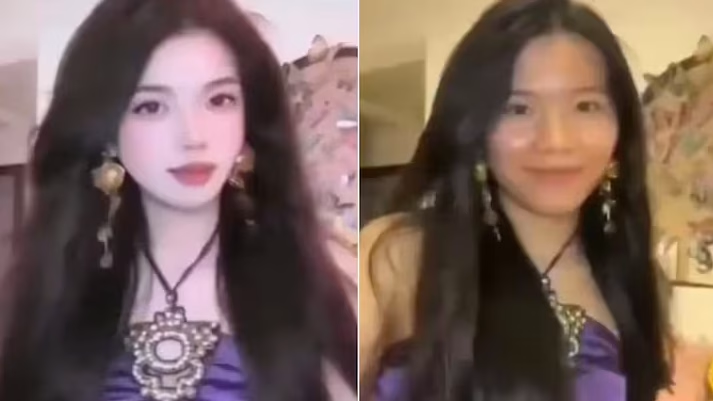
These stories continue to attract attention because they underscore the fine line between thoughtful curation and potential misrepresentation, reflecting a broader tension between audiences’ desire for authenticity and platforms’ emphasis on polished visuals. Many content creators—particularly within highly competitive digital markets—feel pressure to appear “camera-ready” at all times, which can gradually shape viewer expectations around increasingly idealized, and sometimes unrealistic, standards of appearance.