
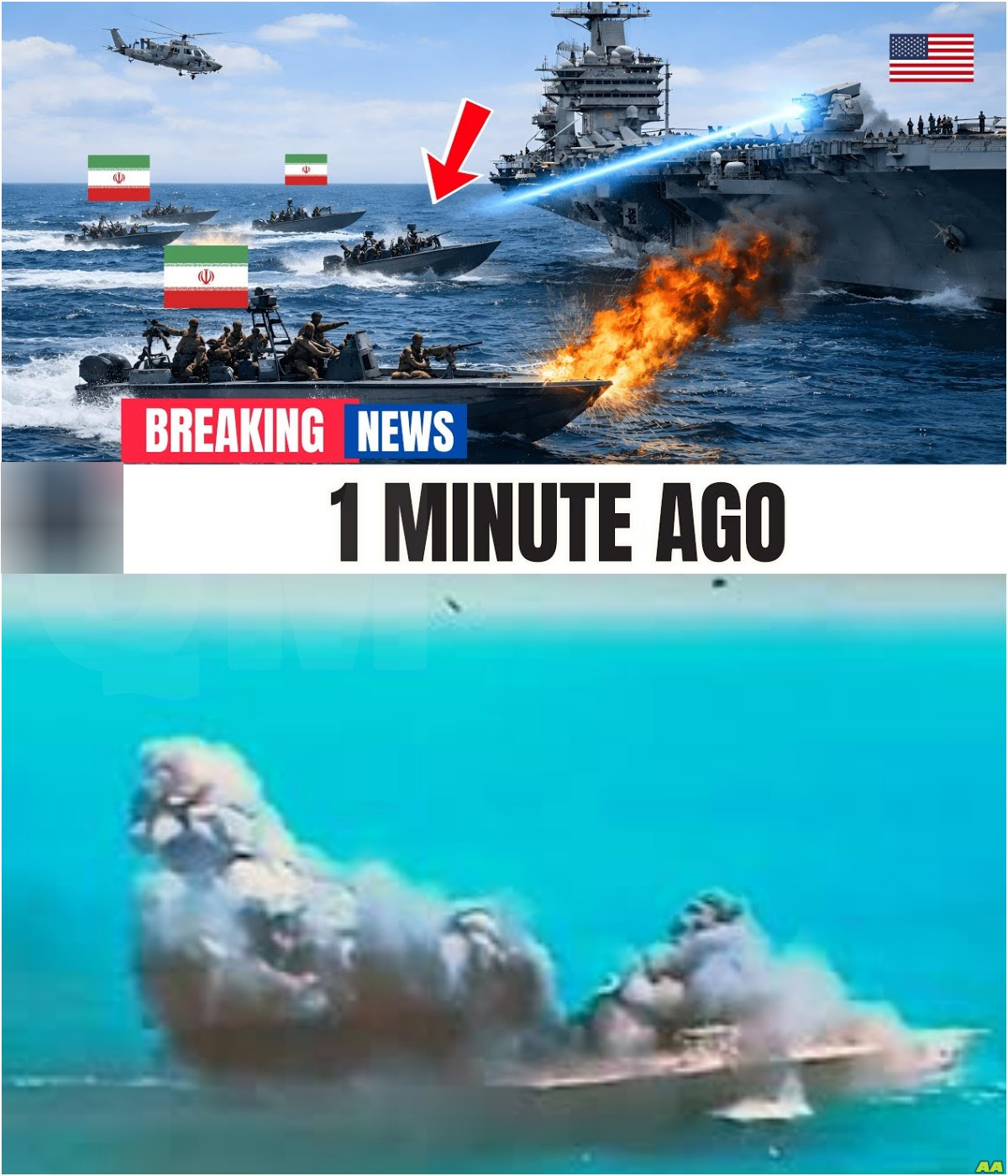
In the Strait of Hormuz, a narrow waterway that serves as a critical artery for global oil supply, a tense standoff unfolded that would rewrite the rules of naval engagement.
As the USS Nimitz, a formidable aircraft carrier, patrolled these strategic waters, Iranian forces prepared to assert their presence.
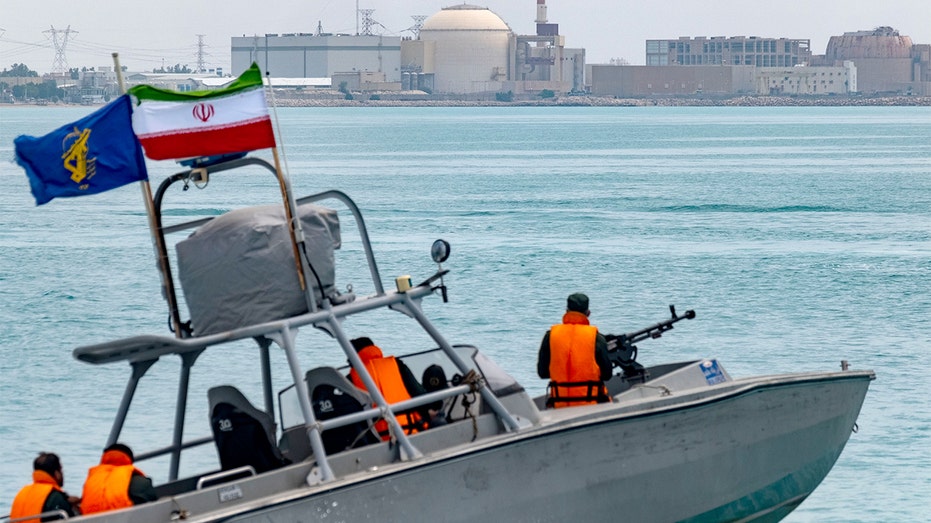
With the world watching, eleven fast attack boats from the Islamic Revolutionary Guard Corps (IRGC) surged out of Bandar Abbas.

Their mission was clear: intimidate, provoke, and capture headlines.
But what transpired next was not a conventional battle; it was a revelation of modern warfare’s shifting dynamics.
No missiles were fired.
No explosions rattled the air.
Instead, within minutes, Iranian navigation systems faltered.
Radios turned to static, and GPS signals vanished.
The IRGC boats, once a symbol of aggression, began to drift helplessly in international shipping lanes, vulnerable and exposed.
This unexpected turn of events left Tehran in shock.
America had not fired the first shot; it had ended the confrontation without escalating the conflict.
A New Era of Naval Dominance
This incident, lasting just 47 minutes, highlights a pivotal moment in naval strategy and international relations.
In an age where sensors, electronic warfare, and narrative power dictate the outcomes of conflicts, traditional notions of firepower are being challenged.
The story of this encounter is not merely about military might; it is about the evolving nature of warfare in the 21st century.
As nations grapple with the implications of technology on combat, the lessons learned from the Strait of Hormuz are profound.

The Build-Up to Tension
The Strait of Hormuz is a geopolitical flashpoint, with 20% of the world’s oil supply passing through its waters.
For Iran, asserting control over this strategic passage has long been a priority.
The IRGC’s fast attack boats, designed for swift maneuvers and intimidation, were deployed to send a message to the United States and its allies.
As the USS Nimitz entered the region, tensions escalated.
Iranian leaders believed they had orchestrated the perfect trap.
The world held its breath as the two forces approached a potential confrontation.
The Unfolding Crisis
As the IRGC boats approached the USS Nimitz, a sense of anticipation filled the air.
Observers expected a display of military might, perhaps even a skirmish.
However, what followed was astonishing.
The Iranian vessels, equipped with advanced technology, suddenly found themselves at a disadvantage.
Their navigation systems collapsed, leaving them disoriented and vulnerable.
The very tools designed to assert dominance became the instruments of their downfall.

The Power of Electronic Warfare
The events in the Strait of Hormuz underscore the significance of electronic warfare in modern military strategy.
In this instance, the United States demonstrated its capabilities in a domain often overshadowed by traditional combat.
By neutralizing Iranian systems without firing a shot, America showcased a new form of dominance.
This incident serves as a reminder that warfare is no longer solely about physical confrontations; it is increasingly about control over information and technology.
Implications for Global Security
The ramifications of this encounter extend far beyond the Strait of Hormuz.
As nations invest in electronic warfare capabilities, the landscape of global security is shifting.
Countries must now consider not only the strength of their conventional forces but also their ability to operate in a technologically advanced battlefield.
This incident may serve as a wake-up call for military strategists worldwide.
A Cautionary Tale
While the United States emerged unscathed from this encounter, the situation serves as a cautionary tale for all nations.
The balance of power can shift rapidly, and reliance on traditional military might may no longer suffice.
As technology evolves, so too must the strategies employed by nations.
The events in the Strait of Hormuz highlight the need for adaptability and innovation in military planning.
Conclusion: A New Chapter in Warfare
In conclusion, the standoff in the Strait of Hormuz represents a significant turning point in modern warfare.
The ability to project power without conventional engagement is a game-changer.
As the world watches, the implications of this incident will continue to resonate in military circles and beyond.
Tehran’s shock serves as a reminder that in the realm of global conflict, perception and technology are as crucial as firepower.
The future of warfare is here, and it demands a reevaluation of strategies and priorities.
As nations navigate this new landscape, the lessons learned from the USS Nimitz and the IRGC will shape the course of international relations for years to come.
In the end, this incident was not just a fleeting moment; it was a harbinger of the complexities that define modern conflict.
The world must remain vigilant as the dynamics of power continue to evolve.
The Strait of Hormuz will remain a focal point, and the events that transpired there will be studied for generations to come.
As we reflect on this encounter, one thing is clear: the rules of engagement have changed, and the future of warfare will be defined by those who can adapt to this new reality.