
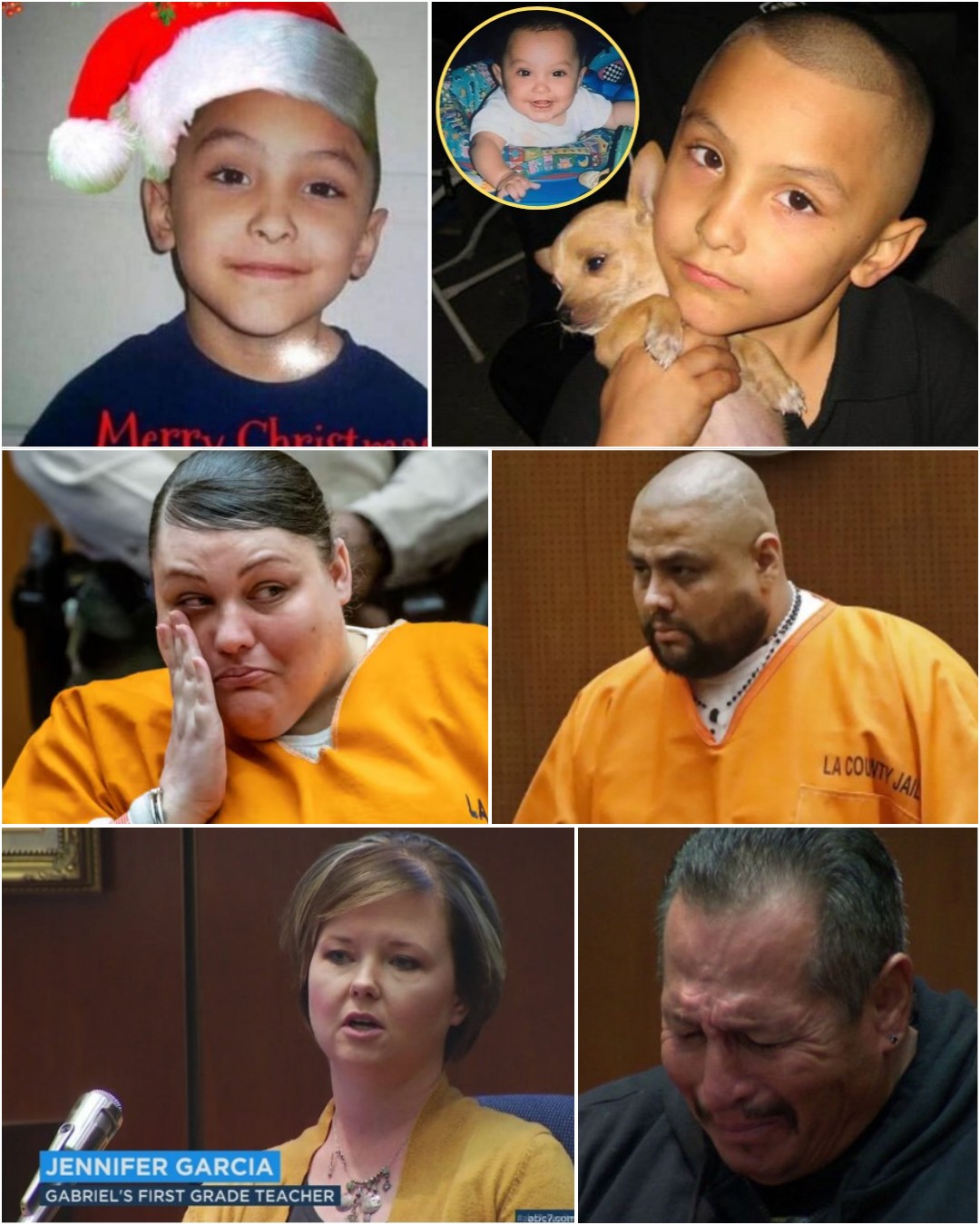
The classroom was quiet on that Tuesday afternoon, the way rooms get quiet after something unspeakable has happened — not peaceful, but hollow. The kind of silence that rings.
Jennifer Garcia had been putting it off for three days. Three days of not coming back to Room 14 at Summerwind Elementary School in Palmdale, California. Three days of sitting in her car in her driveway, unable to move. Three days of watching the phone and dreading the next call that never came — because there was nothing left to call about.
But she had to go back eventually. She had other students. She had a job. She had a desk in the third row — the one with the scratched-up surface and the wobbly leg — that belonged to nobody anymore.
She started with the easy things: the construction paper artwork tacked to the wall, the pencil box, the crayon-stained worksheets with gold stars she’d placed there herself. She worked methodically, the way people do when they’re trying to hold themselves together by staying busy.
That’s when her hand reached the back of the desk.
The paper was folded into quarters, soft from being handled. She almost threw it away with the rest.
She didn’t.
She unfolded it carefully, and in a child’s round, uneven crayon letters — the handwriting of a boy who was still learning how to form his Gs and his Ls — were five words:
“I love you, Ms. Garcia.”
No date. No explanation. Just that.
Jennifer Garcia sat down on the classroom floor and pressed that piece of paper against her chest and wept — not quietly, but the kind of crying that comes from somewhere deeper than sadness. The kind that sounds like it’s trying to claw its way out.
She had called six times.
Six times she had picked up the phone and reported what she was seeing — the bruises, the wounds, the terror in a second-grader’s eyes. Six times a voice on the other end of Los Angeles County’s child welfare hotline had told her someone would handle it. Six times, she had believed them.
Eight-year-old Gabriel Daniel Fernandez had been declared brain-dead the previous Friday, May 24, 2013. He’d never regained consciousness after paramedics found him naked and unresponsive on the floor of an apartment on East Avenue Q.
He was eight years old. He had tucked a love letter inside his desk.
And nobody had saved him.
February 2005 — Palmdale, California
Gabriel Fernandez came into the world on February 20, 2005, in the kind of cold, flat winter that settles over the Antelope Valley — a high desert stretch northeast of Los Angeles where the wind comes down off the mountains and the sky goes on forever.
He was born with dark eyes and a grip that surprised the nurses. Tiny fists that closed around fingers and didn’t let go. A pediatric nurse told the family he had a strong spirit. You could see it in his face, she said. In the way he looked at you.
His mother, Pearl Fernandez, was twenty-four and had spent most of her life being swept by circumstances she couldn’t control or didn’t try to. She had her own history — difficult, fractured, poorly lit. She wasn’t cruel, not yet. But she was deeply unequipped. Looking at her newborn son, she didn’t see a beginning. She saw a weight she didn’t know how to carry.
Within weeks of Gabriel’s birth, Pearl did something that, in its own accidental way, would become the single greatest act of love she ever performed for her son: she gave him to someone else.
Michael Lemos Carranza was Pearl’s uncle — a quietly devoted man in his late forties who worked construction in the Antelope Valley, wore the same beat-up work boots every day, and had a laugh that came from somewhere uncomplicated and genuine. He lived in a modest two-bedroom house in Palmdale with his partner, David Martinez, who worked retail and cooked dinner most nights and had a gift for knowing when someone needed to sit down and be listened to.
Neither of them had planned to be parents.
When Pearl arrived at their door — unannounced, carrying a baby in a car seat and a diaper bag over her shoulder — and said she couldn’t do it, Michael looked at the infant in that carrier and felt something shift in his chest.
“We’ll take him,” he told Pearl. “We’ll love him.”
He meant it. He had no idea yet what that promise would eventually cost him.
2005–2009 — A House Full of Light
The years that followed were, by every account of those who witnessed them, the happiest of Gabriel Fernandez’s short life.
Michael and David’s house was modest by Southern California standards — a two-bedroom with a small backyard where the grass grew in uneven patches and the neighbor’s dog barked at everything. But it was consistent, and it was warm, and for a child, those things matter more than square footage.
Gabriel learned to walk in that living room, grabbing onto the coffee table and then letting go and taking four stumbling steps toward Michael’s outstretched hands before sitting down hard and laughing at himself. He learned to talk there, first in single words and then in the breathless, run-on sentences of toddlers who have discovered that words can describe everything.
He had a worn teddy bear he called “Mr. Snuggles” — a name he’d invented himself at age two with the complete authority of a child who has not yet learned to be embarrassed. He carried Mr. Snuggles everywhere: to the grocery store, to the park, tucked under his arm at bedtime. Michael once washed the bear while Gabriel was at preschool and spent forty minutes using a hair dryer to make sure it was fully dry before Gabriel came home. He didn’t want his boy to worry.
On weekends, they went to the park at the end of their street. Gabriel would sprint ahead, his small legs pumping, shouting back over his shoulder: “Watch me, Uncle Michael! Watch me!” as he scaled the jungle gym with reckless confidence. Michael stood below with his arms out, not because Gabriel needed catching — he rarely fell — but because Gabriel liked knowing those arms were there.
Birthdays were large, loud affairs. Chocolate cake, always. Michael would bake it from scratch, using a recipe he’d clipped from a magazine years before Gabriel was born. Neighbors would come over. The backyard would fill with voices and laughter and the sound of a small boy shrieking with delight.
In the photographs from those years — and there are many, Michael took photographs the way some people take notes, as if he understood even then that he was documenting something worth preserving — Gabriel is always smiling. Not the guarded, cautious smile of a child who has learned to perform happiness for an audience. The real kind. The wide, gap-toothed, completely unself-conscious grin of a kid who has never had to wonder whether he was loved.
He called Michael “Uncle” and David “Uncle David,” though in every practical and emotional sense, they were his parents. Pearl visited occasionally — brief, awkward appearances, usually with a small toy, usually ending with Pearl leaving before things became uncomfortable. Gabriel accepted these visits the way children accept most things they don’t fully understand: without too many questions. This house was his world. These two men were his people.
Then, in 2009, Pearl decided she wanted him back.
The Day Gabriel Had to Leave
Gabriel was four years old when Pearl arrived with paperwork.
Michael had hired a lawyer after Pearl first made noises about reclaiming custody. The lawyer had been honest with him: California family law strongly favors biological parents. Unless there was documented evidence of abuse or neglect — and Pearl hadn’t hurt Gabriel, not yet — the court would likely side with her.
Michael begged anyway. He sat across from Pearl in the living room of the house where Gabriel had taken his first steps and pleaded with her not to do this. Gabriel was happy here. Gabriel was thriving here. Surely she could see that.
Pearl had made up her mind. Maybe she had genuinely convinced herself she was ready to be a mother. Maybe it was the welfare benefits. Maybe it was pride — the particular pride of not wanting to be the woman who handed her child off and walked away. Whatever her reasons, she held the legal upper hand, and she knew it.
Michael packed a small bag for Gabriel: some clothes, the stuffed bear, a book they’d been reading at bedtime.
He crouched down to Gabriel’s level to say goodbye. Gabriel’s face was doing something complicated — the way children’s faces do when the emotion is too large and they haven’t yet learned the words for it.
“I don’t want to go,” Gabriel said, and clutched Michael’s leg with both hands.
“I know, buddy.” Michael’s voice held, barely. “But your mama wants you home.”
“This is home,” Gabriel said.
Michael had no answer for that. He held his boy for a long moment, then stood up and watched Pearl take Gabriel’s hand and lead him out the front door. Gabriel kept looking back — at Michael, at David standing in the doorway, at the house, at the yard with the patchy grass and the jungle gym.
His eyes asked a question he didn’t have the language for yet.
Why aren’t you stopping this?
Michael watched until the car turned the corner and disappeared.
He and David would not see Gabriel again for nearly four years. And when they did, he was in a casket.
2010–2011 — The Grandparents’ Watch
For the first year after Pearl reclaimed Gabriel, the situation was difficult but manageable. Pearl was neglectful the way some people are neglectful — not from cruelty but from a fundamental inability to organize her attention around someone else’s needs. Gabriel went without things, but he wasn’t in physical danger.
His maternal grandparents, Robert and Sandra Fernandez, stepped into the gap. They lived nearby and they were paying attention. They brought food. They made sure Gabriel got to school. They showed up for things Pearl couldn’t be bothered with. They enrolled Gabriel in classes, drove him to doctor appointments, attended school meetings.
They loved him. Fiercely, clearly, with the particular devotion of grandparents who have watched a child be failed and are quietly determined to compensate.
Eventually, concerned by what they were observing, Robert and Sandra took legal steps to formalize their role. They had guardianship papers drawn up — legally notarized documents establishing them as Gabriel’s guardians, signed by proper authorities. They kept the papers in a folder. They showed them to people when necessary.
They believed those papers would protect Gabriel.
They were wrong.
2012 — Isauro Aguirre
Pearl Fernandez met Isauro Aguirre in the spring of 2012, and within weeks he had moved into her apartment, and within months he had rearranged everything inside it.
Aguirre was thirty-seven years old, unemployed, and possessed of a simmering, reflexive anger that attached itself to whatever was within reach. He was not a subtle man. He did not hide what he was — not entirely — but he was practiced at calibrating it for the people who could cause him trouble and unleashing it on those who couldn’t.
Gabriel couldn’t.
The reasons Aguirre singled out Gabriel specifically — while leaving Pearl’s other children largely unharmed — became a focus of the prosecution’s case years later. Prosecutors argued that Aguirre had convinced himself, or decided, that Gabriel was gay. The boy was gentle. He cried easily. He preferred drawing and quiet play to roughhousing. He still had Mr. Snuggles from Michael and David’s house.
For Aguirre, these things were provocations.
The abuse began in the summer of 2012, starting with the kinds of punishments that could be explained away — spankings that were too hard, disciplines that lasted too long — and escalated with terrifying speed into something that bore no resemblance to discipline at all.
Robert Fernandez began noticing changes in Gabriel that fall. The boy who had always been quiet was becoming absent, in the way people become absent when the thing happening to them is too large to carry in ordinary consciousness. He flinched when someone moved too fast near him. He stopped making eye contact.
Robert took his guardianship folder to the local sheriff’s department.
The deputy who looked at his documents glanced at them briefly, then set them down.
“These are fraudulent,” the deputy said.
“They’re notarized,” Robert said. “By a legitimate notary. Look at them.”
The deputy looked at Pearl instead. Pearl said what Aguirre had coached her to say. The deputy sided with Pearl. Gabriel went back to the apartment on East Avenue Q.
Robert Fernandez would spend years replaying that moment. Running it backward and forward in his mind, looking for the thing he could have said differently, the word or argument that might have changed the deputy’s mind. He never found it.
He never stopped looking, either.
September 2012 — Summerwind Elementary School
Jennifer Garcia had been teaching first and second grade for over a decade when Gabriel Fernandez walked into her classroom that September. She was experienced enough to read children quickly — to understand within a few days which ones were shy versus scared, which ones were hyperactive versus anxious, which ones were struggling with the academics versus struggling with something at home.
With Gabriel, it took less than a week.
He was a small boy, dark-haired and watchful, with eyes that tracked the room the way eyes track a room when they’ve learned to be ready for things to go wrong. He sat near the front, which Jennifer initially took for attentiveness. It wasn’t. He wanted to see the door.
The anxiety about homework was what she noticed first. Not the normal nervousness of a child afraid of getting an answer wrong. Something more granular than that. “What happens if I get it wrong?” he asked her one afternoon, very quietly, almost under his breath.
“Nothing, sweetheart,” Jennifer said. “We just try again.”
Gabriel looked at her like he was waiting for the catch. Like he understood that adults said things like that but the world didn’t work that way.
“Nothing happens?” he repeated.
“Nothing happens.”
He didn’t fully believe her. She could see that. But he wanted to.
In the early weeks, he was sweet with her — the kind of sweetness that sometimes lives in children who haven’t had enough of what sweetness is a response to. He’d help her straighten up the classroom after school, lining up the chairs with careful precision, as if the orderliness of things was something he could control and therefore clung to.
She didn’t know, yet, what he was going home to.
October 30, 2012 — The First Call
Seven weeks into the school year, Gabriel arrived one Monday with a wound on his side.
He was wearing a shirt that hung loose and kept catching on something, and when Jennifer asked him whether he was okay, he lifted the hem to show her: a raw, partly-crusted laceration that looked like it had been made by something with an edge.
Jennifer kept her voice and expression carefully neutral, the way teachers are trained to do. “How did that happen, honey?” she asked.
Gabriel told her in the flat, matter-of-fact voice of a child who has learned that honesty is safer than making up stories: his mother had hit him with a belt buckle. He had bled. He asked Jennifer, with genuine curiosity, whether bleeding from a belt buckle was normal.
The question gutted her.
She got Gabriel settled and excused herself to the hallway and called the Los Angeles County Department of Children and Family Services. It was October 30, 2012 — the date would later appear in court records as the beginning of a paper trail that documented a profound and catastrophic failure.
“I need to report suspected child abuse,” Jennifer said, and described the wound, Gabriel’s explanation, and the fear she’d been observing since September.
The intake worker took the information. A social worker named Stefanie Rodriguez was assigned to the case. Rodriguez visited the apartment on East Avenue Q, spoke with Pearl Fernandez, spoke — briefly — with Isauro Aguirre.
She did not interview Gabriel alone. This was a violation of protocol. Speaking privately with the child — away from the adults who might be harming him — is a fundamental requirement of child protective investigations. Rodriguez would later tell supervisors she was carrying an overwhelming caseload. She had more cases than hours to cover them.
The case was noted, assessed at a low-risk level, and closed.
Jennifer called to follow up and was told the situation was being monitored.
Two weeks later, Gabriel came to school with a bruised face.
She called again.
November 2012 Through April 2013 — The Paper Trail Nobody Read
The calls Jennifer Garcia made to the DCFS hotline between October 2012 and April 2013 constitute one of the most damning documents in the history of Los Angeles County child welfare. Six calls. A record of escalating injuries, growing fear, and institutional non-response that reads, in retrospect, like a slow-motion disaster with the outcome inevitable on every page.
November: Gabriel arrived with swelling around his eye and bruising on his cheekbones. When Jennifer asked him about it, he said his mother had shot him in the face with a BB gun.
A BB gun. He was seven years old.
Jennifer called Rodriguez directly this time. Rodriguez noted the call. A follow-up was scheduled. The follow-up, records show, concluded that Gabriel’s swollen lip was a “blister” — a determination that defied the evidence in front of the social worker’s eyes and would later become the subject of criminal charges.
December: Gabriel had bruising on both arms — the kind of marks that, to anyone familiar with abuse patterns, are clearly not accidental. Jennifer called the hotline. Intake number three. The worker assured her the case was being monitored.
January 2013: Black eye. Swollen lip. Jennifer called. Intake number four. Someone would look into it.
February: Gabriel came to school with what appeared to be burn marks on his skin. Jennifer’s voice, when she called the hotline this time, had acquired an edge that she couldn’t entirely control. “I’ve called four times,” she said. “The same child keeps coming in with new injuries. I need someone to actually go out there and see what’s happening.”
She was told someone would follow up.
March: More bruising. Jennifer called again. Intake number five. She documented the call in her own records because she had started keeping records, writing down dates and descriptions and the names of the workers she spoke to. She didn’t fully know why she was doing this yet. Some instinct told her she might need it later.
She was right. She would need it in a courtroom.
April 2013 — the sixth call: Gabriel arrived wearing girls’ clothing. A dress that clearly didn’t belong to him, that hung awkwardly on his frame and made the other students stare. Gabriel’s face was burning red. He didn’t want to look at anyone.
Jennifer pulled him aside, away from the other kids, and asked carefully: “Did you choose to wear that today, honey?”
Gabriel shook his head.
“Can you tell me about it?”
He shook his head again. His jaw was set in that way children set their jaws when they are determined not to cry in school.
Jennifer returned to her desk and picked up the phone.
“I’ve called five times about this child,” she told the intake worker, no longer attempting to moderate her frustration. “I am calling a sixth time. Gabriel Fernandez is being abused. He is coming to school weekly with new injuries, and now he’s being humiliated in ways I can’t fully understand. When is someone going to actually do something?”
The intake worker was calm. The intake worker had protocols. “Ma’am, I understand your concern. The case is being monitored.”
Monitored.
Jennifer hung up the phone and sat at her desk for a long moment, looking at Gabriel through the window of her classroom door — at this small boy trying to be invisible in a dress he hadn’t chosen, trying to endure the stares of his classmates with whatever dignity a seven-year-old can summon under those circumstances.
She had done everything she knew how to do.
And it wasn’t enough.
What Was Happening Inside That Apartment
The full picture of what Gabriel Fernandez endured during the eight months between Isauro Aguirre moving in and Gabriel’s death did not emerge publicly until the grand jury transcripts were released in August 2014. What those documents described made experienced prosecutors and veteran law enforcement officers use the same words: they’d never seen anything like it.
Prosecutor Jonathan Hatami, one of the lead attorneys on the case, told the grand jury: “For eight straight months, he was abused, beaten and tortured more severely than many prisoners of war.”
That framing — prisoners of war — was not hyperbole. It was a deliberate legal and moral assertion about the nature and duration of what was done to a child who weighed less than sixty pounds.
Gabriel was beaten. With fists, with belts, with belt buckles, with whatever was available. He was beaten on parts of his body that clothing could hide and parts that it couldn’t. The injuries Jennifer Garcia observed at school were the injuries that survived the journey from the apartment to the classroom. They were not the worst injuries.
He was shot with a BB gun. Multiple times, including in the face. When paramedics eventually found Gabriel, there were BB pellets embedded in his lung and his groin.
He was burned. The marks Jennifer observed in February were consistent with burns, and they were.
He was doused with pepper spray.
He was deprived of food. His siblings ate. Gabriel watched. He was kept hungry as a form of control, a way of keeping him weak and compliant. He was not always compliant, because he was eight and because some things in children cannot be completely extinguished, and when he wasn’t, the punishments escalated.
He was locked in small spaces — a cabinet, records would show, with a sock stuffed in his mouth to muffle the sounds he made. The other children in the house could hear those sounds through the walls. They were powerless and they knew it. Their silence, which was not chosen but enforced, is one of the case’s most heartbreaking elements: children bearing witness to what was being done to their brother, unable to save him, unable even to tell anyone without risking being punished themselves.
Pearl and Aguirre covered their tracks with practiced deliberateness. They had Gabriel forge doctor’s notes explaining his injuries. They coached the children on what to say if anyone asked questions. When Pearl called 911 on May 22, her story was already prepared: Gabriel had fallen and hit his head on a dresser.
She had told a version of that story before. Social workers had largely accepted it.
Paramedic James Cermak, a veteran first responder who had seen things in the course of his career that most people never encounter, testified later about what he found when he arrived at the apartment on East Avenue Q. He had been doing this work for years. He thought he had a sense of the range of things that could happen to a human body.
“It was just like every inch of this child had been abused,” Cermak testified. He paused. “Every inch.”
May 17, 2013
Jennifer Garcia would replay the final Friday she saw Gabriel alive many times in the years that followed. She would examine it with the merciless scrutiny of someone looking for the moment they missed, the sign they should have seen, the thing they should have done differently.
She never found it. She had done everything. But knowing you did everything and having it be enough are two different things, and Jennifer Garcia would carry that difference for the rest of her life.
Gabriel came to school that morning quieter than usual, which was saying something. He ate his lunch slowly, staring at the table. At recess, while the other kids filled the playground with noise and motion, Gabriel sat by himself near the fence, watching them.
Before dismissal, he approached Jennifer’s desk.
“Ms. Garcia?” His voice was soft.
“Yes, honey?”
He stopped. There was something he’d intended to say and he’d changed his mind about it. She could see the decision happening in his face — the pullback, the retreat to safer ground.
“Nothing. I just…” A small pause. “Have a good weekend.”
“You too, Gabriel.”
He turned and walked out of Room 14 with his backpack riding high on his small back, and Jennifer watched him go through the window until she couldn’t see him anymore, and then turned back to her classroom and began preparing for Monday.
She did not know she was watching him walk out of her life.
She did not know that back on East Avenue Q, Isauro Aguirre had plans for the weekend.
Monday, May 20 — The Absence
Gabriel didn’t come to school Monday.
Jennifer marked him absent and felt the familiar, specific worry she’d been carrying since October — the worry that had a name and an address attached to it. She called the apartment. No answer.
Tuesday: absent again. She called again. Nothing.
Wednesday morning, Jennifer did the only thing left to her. She called the DCFS hotline a seventh time. “Gabriel Fernandez has not been in school for three days,” she said. “I’ve been calling the home. I’m worried about him.”
“We’ll make a note,” the worker said.
At 2:17 PM that same Wednesday — May 22, 2013 — Pearl Fernandez picked up a phone in an apartment on East Avenue Q and dialed 911.
“My son isn’t breathing,” she told the dispatcher.
She said he had fallen and hit his head on a dresser.
What Paramedics Found
The paramedics and sheriff’s deputies who arrived at the apartment on East Avenue Q were experienced professionals. They had responded to trauma calls before. They had seen the aftermath of accidents, of violence, of all the ways the human body can be damaged.
Nothing in their experience had prepared them for Gabriel Fernandez.
He was on the floor of a bedroom, naked, unconscious. He was not breathing. He was very small.
Pearl Fernandez was present. Isauro Aguirre was present. The other children in the household were present, standing in the hallway with expressions that told the deputies things Pearl’s story didn’t.
Emergency room physicians at Antelope Valley Hospital assessed Gabriel’s injuries and immediately contacted law enforcement. He had a cracked skull. Three broken ribs. BB pellets embedded in his lung and his groin. Bruising across virtually every surface of his body, in multiple stages of healing — old injuries layered beneath new ones, a physical record of months of sustained violence.
Gabriel was airlifted to Children’s Hospital Los Angeles, where a trauma team worked on stabilizing him through the night and into Thursday and Friday. His brain was swelling. The damage was too extensive. His organs were beginning to fail.
On Friday, May 24, 2013, at 11:00 AM, eight-year-old Gabriel Fernandez was declared brain dead.
He was two months past his eighth birthday.
He had never regained consciousness after being found.
The Siblings Speak
Detectives from the Los Angeles County Sheriff’s Department began conducting interviews while Gabriel was still on life support. The priority — before any arrests, before any charges — was understanding exactly what had happened and gathering the evidence that would make it stick.
Gabriel’s siblings presented detectives with a picture so comprehensive and so specific that there was no ambiguity about the nature or duration of the abuse. These children, who had lived inside the same nightmare and been largely spared its worst expressions, had seen everything.
They described a household organized around Aguirre’s moods. When he was calm, a kind of tense functionality prevailed. When he was not — which was frequent — Gabriel bore the consequences. They described the cabinet. They described the pepper spray. They described being made to watch. They described the sounds from behind closed doors and the silence that followed the sounds.
They were children. They described these things the way children describe things: directly, without the softening that adults learn to apply to unbearable facts.
Veteran investigators sat across the table from these kids and kept their faces professionally composed and felt something crack inside them that didn’t fully heal.
The Arrest
On May 23, 2013 — the day before Gabriel died — Pearl Fernandez and Isauro Aguirre were arrested.
Pearl was initially charged with felony child endangerment. Aguirre with attempted murder. When Gabriel died the following day, both charges were upgraded to first-degree murder with special circumstances of torture. The Los Angeles County District Attorney’s office announced it would seek the death penalty for both defendants.
Aguirre, according to arresting deputies, was expressionless when they put the handcuffs on him. Pearl was not expressionless. She was crying. She would later claim, through her attorneys, that she herself was a victim of Aguirre’s control and abuse — that she had been too frightened to stop what was happening, too dominated to intervene.
The jury that eventually heard her case did not have to evaluate those claims. She pleaded guilty before trial.
An Unprecedented Move
In 2016, three years after Gabriel’s death, Los Angeles County prosecutors announced criminal charges against four DCFS social workers: Stefanie Rodriguez, Patricia Clement, Kevin Bom, and Gregory Merritt. They were charged with child abuse and with falsifying public records — specifically, the records they had created, or failed to create, or deliberately altered during their investigations of Gabriel Fernandez’s case.
It was an unprecedented legal move. Social workers are almost never criminally charged for failing to remove a child from danger. The reasoning behind this prosecutorial tradition is partly structural — child welfare decisions involve judgment calls, and holding caseworkers criminally liable for judgment calls would make an already difficult job impossible to fill — and partly philosophical: the violence against Gabriel was perpetrated by Pearl Fernandez and Isauro Aguirre, not by underpaid, overworked county employees.
The charges sent a different message. The message was that negligence, at sufficient magnitude, becomes something else. That a paper trail documenting six calls, multiple visible injuries, and a living child who needed help could not be explained entirely by caseload pressure.
Jennifer Garcia, who testified in the social workers’ case as she had in Aguirre’s trial, did not feel vindicated by the charges. “I don’t want anyone else to go to prison,” she said in a television interview afterward. “I want the system to change so the next Gabriel has a chance.”
The social worker charges were ultimately dismissed in 2020 by an appellate court, which ruled that while the workers had been negligent — gravely, inexcusably negligent — they could not be held criminally liable for a murder they did not commit.
Jennifer Garcia watched the news that day with the same expression she’d had when she hung up the phone after the sixth call. Familiar helplessness. The recognition that the system had closed around itself again.
October 2017 — The Trial of Isauro Aguirre
The trial of Isauro Aguirre began in October 2017, four years and five months after the paramedics found Gabriel on that bedroom floor.
The delay was the product of the American legal system operating as it was designed to operate — exhaustive, deliberate, granting the accused every procedural protection the Constitution provides. The delay was also, for everyone who loved Gabriel, an additional sentence. Four years of waiting for the accounting.
Deputy District Attorney Jonathan Hatami was the lead prosecutor on the case. He had been involved since shortly after Gabriel’s death and had spent four years building the evidence into something that would survive scrutiny. He was known as a careful, methodical attorney — not a showman, not given to the theatrical excesses that sometimes undermine serious cases. He believed in letting the evidence speak.
The evidence spoke loudly.
Gabriel’s siblings testified with their faces hidden from the public gallery, as they had throughout the proceedings. Their testimony described, in children’s direct language, the duration and the specificity of what had been done to their brother. They named dates when they could. They named implements. They named the sounds and the silences.
Medical examiners presented a comprehensive account of Gabriel’s injuries. The cracked skull. The broken ribs. The BB pellets embedded in the lung and the groin. The layered bruising that documented months of accumulated violence. The examiner testified carefully, professionally, without editorializing. The facts did not require editorial assistance.
Jennifer Garcia took the stand. She had not received a subpoena — she was not legally compelled to appear. She was there because she wanted to be there, because she had called six times and she was going to say that under oath and in public and look Isauro Aguirre in the face while she did it.
She testified about the injuries. About the calls. About the homework anxiety and the question — is this bleeding normal? — that had followed her for years. She testified about the last Friday, about the small backpack and the sad smile and the Have a good weekend.
“I go through all the whys,” Garcia said on the stand. “Why didn’t they ask this? Why didn’t they do this? Why didn’t they go a step further? Why didn’t they take him out? I go through all those questions and it eats at my stomach. I think about it every day, all the time.”
She had carried a tremendous amount of guilt, she said. It affected her physically. It affected her in ways she was still navigating years later. She had called six times, and she had loved that boy, and she would never fully reconcile those facts with the outcome.
Aguirre sat at the defense table throughout the trial and watched the proceedings with an expression that was either very controlled or completely vacant. His attorneys argued that Pearl was the primary abuser and that Aguirre’s role had been exaggerated. They pointed to Pearl’s plea deal as evidence that the prosecution had already acknowledged the limits of its case.
The jury did not agree.
The Verdict and the Sentencing
On November 15, 2017, the jury found Isauro Aguirre guilty of first-degree murder with special circumstances of torture.
Jury deliberations on the penalty phase began in December. The jury was initially deadlocked — evidence that even in a case with this level of evidence, some jurors struggled with the finality of what they were being asked to recommend. On December 13, they reached a verdict: death.
The jury forewoman read a statement from the panel after the verdict was announced. It was unusual for a jury to do this — to speak publicly about their reasoning and their feelings. The statement made clear that the jurors understood the weight of what they’d seen and what they’d decided.
On June 7, 2018, Superior Court Judge George G. Lomeli sentenced Isauro Aguirre to death and Pearl Fernandez to life in prison without the possibility of parole.
Pearl had pleaded guilty in February 2018, accepting the life sentence in exchange for sparing the proceedings — and, critics noted, herself — from a second trial. At sentencing, a family member stood before the court and addressed Pearl directly: “Gabriel had unconditional love for you,” the relative said, “and you took advantage of that.”
Judge Lomeli, who had been on the bench for nearly twenty years, had seen a great many things in a Los Angeles courtroom. He called Gabriel’s murder “horrendous, inhumane and nothing short of evil.” He said it was the worst abuse he had witnessed in his career. He told both defendants that he hoped they woke in the middle of every night “plagued by their actions.”
“This case is without a doubt the most aggravated and egregious case of torture this court has ever witnessed,” Lomeli said. “The weight of this factor alone is simply enormous.”
Aguirre sat in his chair and showed nothing.
He was led out. The case was over.
Gabriel had been dead for five years, two weeks, and two days.
Michael Lemos Carranza
The verdict brought closure to a legal process. It brought nothing close to closure to the people who had loved Gabriel and failed to save him.
Michael Lemos Carranza, the man who had raised Gabriel during the happiest years of his life, never recovered.
After Pearl took Gabriel away in 2009, Michael had tried to maintain some connection — calls, requests for visits, letters to Pearl asking for updates. The responses, when they came, were brief and uninformative. When news reached Michael in May 2013 that Gabriel was in the hospital, he drove there immediately. He was not considered immediate family. He was not permitted to see his boy.
He was forty-nine years old when Gabriel died. He had built his life around a child who had been taken from him, and then that child had been killed, and Michael had been standing outside a hospital while it happened.
In 2014, consumed by a grief he had no architecture for, Michael Lemos Carranza died by suicide.
He was fifty years old. He had given Gabriel Fernandez the best years of Gabriel’s life, and the weight of not being able to give him the rest of them was more than he could carry.
David Martinez survived Michael by six years. He kept what remained of the life they’d built together, carrying both his own grief and Michael’s absence. In December 2020, during the early winter surge of the COVID-19 pandemic, David contracted the virus. He was already weakened by years of loss. He did not recover.
The two men who had given Gabriel Fernandez his only experience of a safe and loving home were both gone within seven years of Gabriel’s death. Two more losses in a cascade of losses that began the day Pearl Fernandez drove away with her son and a car seat.
Robert and Sandra Fernandez
Gabriel’s grandfather, Robert Fernandez, is still alive. He is still angry. He is still carrying a folder with the guardianship papers inside it.
Robert became, in the aftermath of Gabriel’s death, an advocate for grandparents’ rights — for the legal standing of extended family members who are attempting to protect children from harm. He speaks at hearings. He tells his story to anyone who will listen. He holds up those papers — notarized, legal, ignored by a sheriff’s deputy who dismissed them as fraud — and asks the audience to imagine what might have been different if someone had read them.
His wife Sandra died in the years after Gabriel’s case. The grief had done to her what grief does to some people when it doesn’t have anywhere to go.
Robert carries on.
“These papers could have saved Gabriel,” he says, every time. “Don’t dismiss families who are trying to help.”
February 2020 — Netflix
In February 2020, Netflix released “The Trials of Gabriel Fernandez,” a six-episode documentary series directed by Brian Knappenberger. The documentary was comprehensive, rigorously reported, and devastating — and it brought Gabriel’s story to an audience of millions who had never heard his name.
The series featured home video footage from Michael and David’s house: Gabriel as a toddler, running in the backyard, laughing at the camera with his gap-toothed grin, completely and visibly at ease. It featured Jennifer Garcia speaking about the calls and the note in the desk. It featured Robert Fernandez and the guardianship folder. It featured prosecutors, advocates, and former DCFS officials wrestling with the institutional failures the case had exposed.
The world’s response was immediate and overwhelming.
Social media exploded with a grief and outrage that the legal system’s timeline had made it impossible to express in real time. People who had been toddlers themselves in 2013 watched the footage of Gabriel and wept. People in their sixties and seventies — the demographic that had grown up on stories like this in true crime books and newsmagazine programs — recognized in Gabriel’s story something they had seen before, in other children, in other failed systems, across decades of American institutional inadequacy.
Petitions circulated. Demands for accountability were renewed. The documentary accomplished something that six phone calls and a trial had not: it made the country pay sustained, collective attention to what had happened to a child in Palmdale, California, in 2013.
Gabriel’s grave — in a Palmdale cemetery — began receiving visitors. Strangers who had never met him, who had found their way to his headstone through the documentary. People who left flowers and small toys and handwritten notes. The headstone reads: “Beloved.”
He was.
The Changes That Came After
In the wake of Gabriel’s death and the subsequent legal proceedings, Los Angeles County implemented a series of reforms to its child welfare system. Caseload limits were reviewed. Training programs were updated. Oversight mechanisms were strengthened. California passed legislation addressing specific failures the Gabriel Fernandez case had identified.
Advocates for child welfare reform — people who had spent years trying to draw attention to systemic inadequacies — acknowledged the changes while noting their insufficiency. The fundamental problems, they said, remained: too many cases for too few caseworkers, too little funding, an institutional culture that privileged keeping families intact even when the evidence suggested intact families were dangerous ones.
Jonathan Hatami, who prosecuted Aguirre, continued to advocate for reform from within the system. Jennifer Garcia continued to teach, and to speak at conferences and teacher training programs about what happened when you see a child in danger.
“Make the second call,” she tells teachers. “Make the third. Make the sixth. Because that child is depending on you, and your call — even when it feels like it’s disappearing into a void — creates a paper trail. And sometimes that paper trail is all that’s left.”
She speaks carefully about guilt. She has spent years in therapy working through it. She knows, intellectually, that she did not kill Gabriel Fernandez. She knows that she called six times and that no reasonable professional could have done more within the constraints she faced. She knows all of that.
She also knows that Gabriel tucked a piece of paper inside his desk that said I love you, Ms. Garcia, and that she found it three days after he died, and that she will carry that note — and what it means — for the rest of her life.
Five Children Every Day
According to the U.S. Department of Health and Human Services, approximately five children die every day in America from abuse or neglect. Not five children a week, or a month. Five children, every twenty-four hours, in the wealthiest country in human history.
Five children whose deaths might have been prevented — by a teacher who made the call, by a social worker who had fewer cases and more time, by a grandparent whose legal documents weren’t dismissed, by a system that prioritized safety over the bureaucratic comfort of keeping families nominally together.
Gabriel Fernandez is one name that we know. He became known because a documentary filmmaker found his story and because the details of his case were so extreme and so thoroughly documented that they could not be reduced to a statistic. But he is one of many. He was one of five that day. And the day before. And the day after.
Most of them don’t have documentaries. Most of them have a case number and a closed file and a social worker who moved on to the next case.
The Note
Jennifer Garcia still has the note. She has kept it for more than a decade, through every difficult day and anniversary and court proceeding and Netflix release and stranger’s question about how she is doing.
“I love you, Ms. Garcia.”
Written in crayon. Written by a child who was living through something unimaginable and still had love inside him — enough to fold up on a piece of paper and hide inside his desk, a secret message from a boy who needed a place to put his tenderness because he didn’t have enough people to give it to.
That is what makes Gabriel Fernandez’s story endure in the way it does: not just the horror of what was done to him, but the persistent, indestructible humanity of who he was inside it. A child who loved his teacher. Who loved his uncles. Who loved his chocolate cake and his teddy bear and the park at the end of Michael and David’s street. Who went to school on the last Friday of his life and said have a good weekend before walking out the door.
That love did not save him.
But it didn’t die with him, either.
What We Can Do
The National Child Abuse Hotline is 1-800-4-A-CHILD (1-800-422-4453). It operates twenty-four hours a day, seven days a week, staffed by trained professionals who can help you assess what you’re seeing and guide you through the reporting process. You can remain anonymous. You do not need proof. You need only what the law calls “reasonable suspicion” — a good-faith belief, based on what you’ve observed, that a child may be in danger.
If you are a teacher, or a school counselor, or a pediatrician, or a neighbor, or anyone who has looked at a child and felt that something was wrong: make the call. Document it. Follow up. If the first call goes nowhere, make the second. If the second goes nowhere, make the third. Create the paper trail. Be the person who doesn’t give up. Be Jennifer Garcia on her best and worst day — persistent and heartbroken and calling again anyway.
If you are a family member watching a child in a dangerous situation: get legal counsel. Pursue guardianship through every available channel. Document everything. Do not accept “no” from a single deputy who won’t read your papers. Push until someone reads them.
If you are a policymaker, a county supervisor, a legislator: look at Stefanie Rodriguez’s caseload at the time of Gabriel’s death. Look at what it means to assign a human being an impossible volume of suffering to triage, and then express shock when something gets missed. Funding child welfare is not a liberal or conservative issue. It is a question of whether children’s lives are worth the line item.
Gabriel Daniel Fernandez was born February 20, 2005. He died May 24, 2013. He was eight years old and he loved chocolate cake and he loved his teacher and he loved two men who raised him in a house full of laughter in Palmdale, California, and he deserved to grow up.
He should be twenty years old right now. He should be figuring out what his life is going to be.
Instead, he’s in a cemetery in the Antelope Valley, visited by strangers who never met him.
His headstone says Beloved.
He was.
He is.
And his story is not finished — not as long as there are teachers who will make the sixth call, grandparents who will hold up their papers, advocates who will stand in front of lawmakers and say: this happened, and it will happen again, unless we change what we are doing.
Gabriel Fernandez could not be saved.
The next Gabriel can be.
Make the call.