
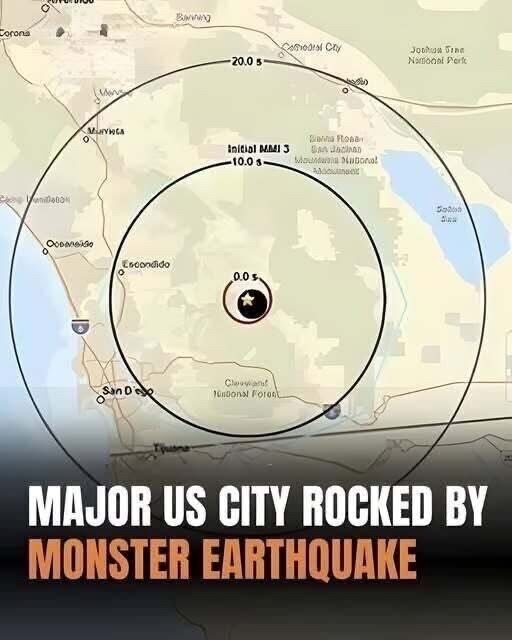
The ground didn’t merely tremble—it roared. In the quiet hours before dawn, a 5.2-magnitude earthquake surged from the small town of Julian and rippled across Southern California, jolting millions awake from San Diego to Los Angeles. Phones vibrated with alerts. Walls creaked. Hearts raced. Five seconds of warning flashed on screens—five seconds to brace, to reach for loved ones, to wonder if this was the moment everything would change.
For those who felt it, the quake wasn’t defined by numbers, but by vulnerability. People froze in doorways, lay still in their beds, or watched lamps and ceiling fans sway in the dark. Then, almost as suddenly as it began, it ended. No widespread damage. No blaring sirens. Just an uneasy silence hanging in the air.
What remained was a shared realization: those brief seconds of early warning matter. The alert was a small miracle of technology, proof that while nature still commands immense power, humanity is learning to listen faster. By morning, nervous jokes filled social feeds—but beneath them was gratitude. This time, the earth was merciful. Next time is unknown.