
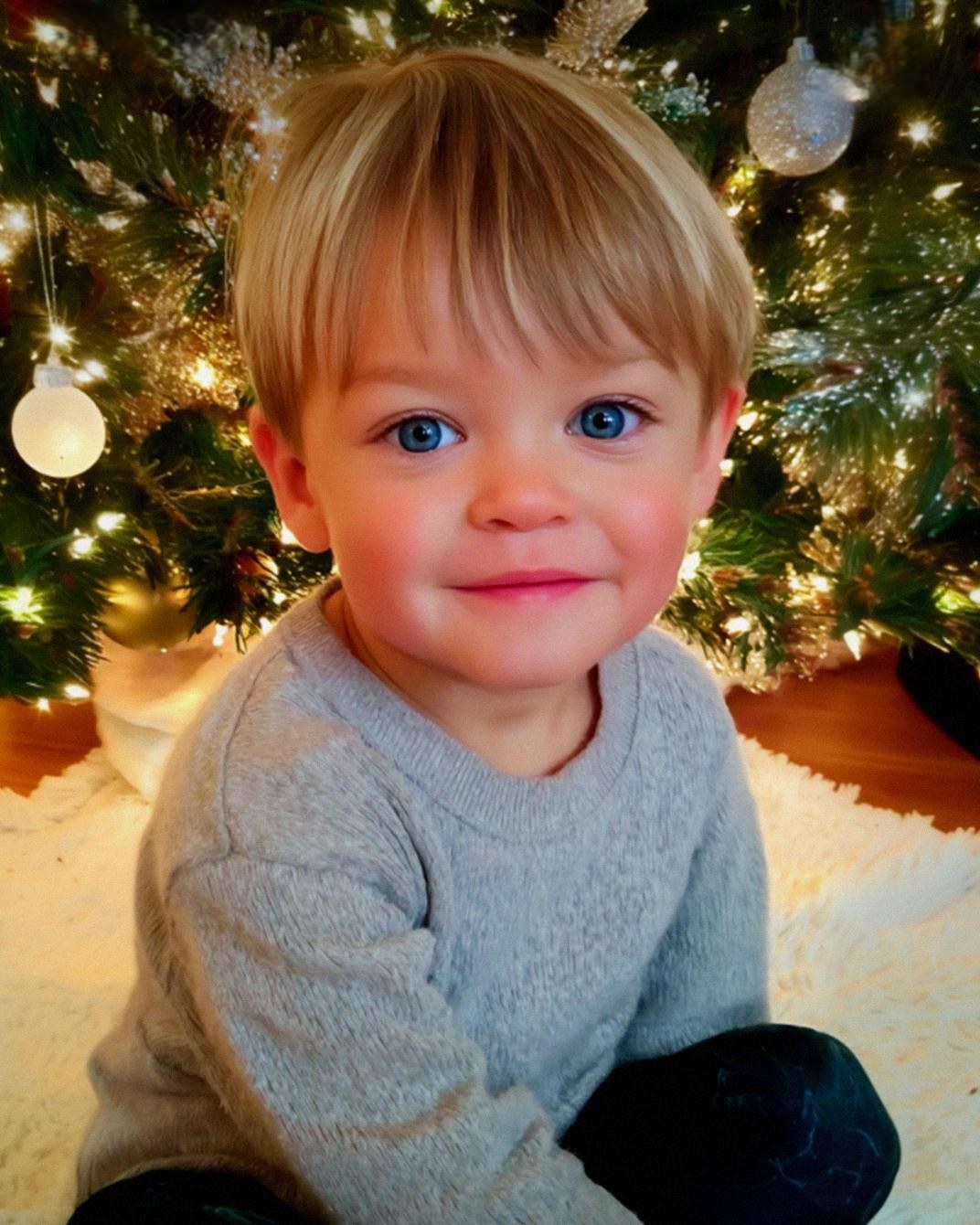
We adopted that 3-year-old boy on a quiet winter morning, just days before the holidays, when our house still felt too big and too silent. He sat on the floor near the Christmas tree, unsure where to place his hands, unsure whether the warmth around him was real or temporary. His blue eyes studied everything—the lights, the ornaments, the soft rug beneath him—as if memorizing it all in case it disappeared. When he looked up, he offered a careful smile that felt more like a question than joy.
The agency file was thin, but heavy. “Multiple placements,” it read. “Withdrawn. Quiet. Delayed speech.” People always ask why we chose him, as if love needs an explanation. The truth was simple: he didn’t reach for us. He didn’t cry. He just watched. And in that stillness, we saw a child who had learned early that expecting nothing hurts less than hoping. He had mastered the art of being small, silent, and easy to overlook.
The first nights were the hardest. He woke up disoriented, trembling, and couldn’t explain what he needed. He flinched at sudden sounds. He hid crackers in his pockets and once tucked food under his pillow. One evening I raised my voice on the phone—not in anger, just frustration—and he covered his ears and slid under the table. That was the moment I understood: his fear wasn’t dramatic. It was practiced. It was survival.
But change came in tiny steps. He started laughing at silly songs in the car. He began sleeping through the night with the door cracked open. He stopped hoarding food. And then, one evening during a movie, he leaned against my shoulder without asking. It lasted only a second, but it felt like a lifetime. Trust doesn’t arrive loudly—it tiptoes in, still afraid it might be sent away. That night, I realized something: we didn’t just adopt a child. We gave him permission to believe he was finally home.