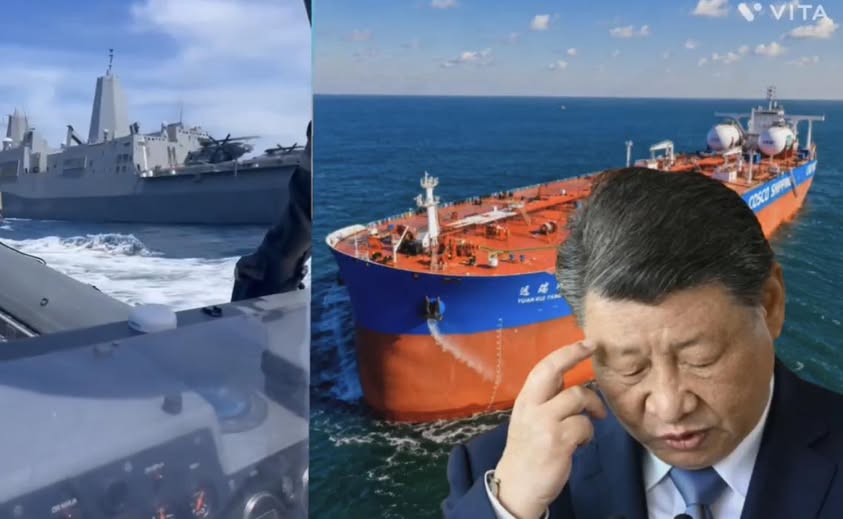
President Trump wasted no time after weekend peace talks with Iran collapsed. On April 13, 2026, the US Navy slammed a naval blockade on Iranian ports and coastal areas in the Strait of Hormuz, choking off the regime’s cash flow from oil exports.
Shipping data confirms the immediate impact. At least two oil tankers headed for China reversed course near the strait shortly after the blockade kicked in at 10 a.m. EDT. The Malawi-flagged Rich Starry, laden with oil and signaling China as its destination, turned back within minutes of approaching the chokepoint after leaving Sharjah anchorage. The Botswana-flagged Ostria, a partial load of oil with Chinese links, did the same.
Reports of a third tanker vary, but the message is clear: no more easy money for Tehran. The US is targeting vessels entering or leaving Iranian ports, while still allowing neutral traffic through the strait to other destinations. Trump made it plain – any Iranian fast-attack boats getting too close get eliminated.
This is America First in action. By squeezing Iran’s oil revenue, estimated at hundreds of millions daily, the US is forcing the mullahs back to the table on American terms, especially over their nuclear ambitions. No more funding terror or enriching uranium while the world pays the price at the pump.
China, which relies heavily on Iranian crude, just got a sharp reminder of who controls the world’s most critical energy chokepoint. Their tankers are turning around instead of testing the US Navy.
The blockade is working. Iran is feeling the heat, and America’s enemies are learning the hard way that weakness invites pressure – strength delivers results.
Sources:
Reuters, CBS News, Anadolu Agency, MarineTraffic shipping data, US Central Command announcements, April 13-14 2026 reports.